NASA has selected Lockheed Martin to be the prime contractor to build the Orion spacecraft, the next generation vehicle that is supposed to replace the shuttle and return human beings to the Moon. The NASA website coverage is much the same as the initial press release, but more details will undoubtedly come out. Lockheed Martin beat a combined Northrop/Boeing consortium to get the Orion contract. The contract is initially worth $3.9 billion USD, with possible additional options for another $3.7 billion USD.
Interesting to note that all of Lockheed Martin's space expertise has been related to unmanned, robotic missions. It's the other guys who have the experience building manned space vehicles -- Mercury, Gemini, Apollo, and the LEM were all built by companies purchased by Northrop or Boeing.
Since the last Apollo astronauts left the Moon in 1972, not much lunar exploration has occurred, and all of it by unmanned orbiters or landers. Between 1973 to 1976, the Soviet Union sent several of their Luna probes, one of which was a successful sample return mission.
Due to a certain amount of "been there, done that" thinking, there was a hiatus of 14 years where no active lunar research happened. It was not until the 1990s that spacecraft returned to the Moon, starting with the Japanese Hiten in 1990. The Americans sent Clementine (1994) and Lunar Prospector (1998-1999) -- both mapping missions, with Lunar Prospector having an additional objective to search for water ice at the lunar poles.
Dr. Alan Binder was the Principal Investigator for the Lunar Prospector mission. I met him at the Apogee Books table at the Worldcon last week in Anaheim. Dr. Binder is highly critical of NASA and its contractors -- he has written a near future science fiction disaster novel -- Moon Quake -- to illustrate what he feels are NASA's shortcomings.
The Europeans sent SMART-1 to the Moon in 2003. The SMART-1 probe was a platform to test new technology developed by the European Space Agency. Chief among these was an ion engine, which SMART-1 used to place itself on a spiral trajectory to the Moon over the course of a year. Since 2004, SMART-1 has been in a polar orbit over the Moon, conductiong a photographic reconnaissance. Over the last two years, its fuel reserves have diminshed, and shortly the spacecraft will be unable to manuever. Therefore, ESA intends to crash SMART-1 into Lacus Excellentiae this weekend, on Sunday September 3, around 0200 EDT. It is hoped that the crash can be monitored from earth with telescopes, which will allow some information to be obtained on lunar surface composition. Depending on conditions, the light intensity of the crash may range from magnitude 7 (visible with binoculars/small telescopes) to magnitude 15 (forget trying to see this with anything except a really big telescope at a major observatory).
The next item of space news is the upcoming launch, by mid-September, of the first woman space tourist -- Anousheh Ansari, an Iranian-born U.S. entrepreneur who is traveling to the International Space Station. She will go up in a Soyuz TMA-9 spacecraft from Baikonur, with ISS Expedition 14 -- cosmonaut Mikhail Tyurin and U.S. astronaut Miguel Lopez-Alegria. Ten days later, she returns with Expedition 13 -- Pavel Vinogradov and Jeff Williams, who have been on the ISS since April 1.
Ansari and her husband, Amir, co-founded the Texas-based Telecom Technologies, Inc. They were major donors to the X-Prize, which is why it was called the Ansari X-Prize. Anousheh Ansari is following in the footsteps of space tourists Dennis Tito, Mark Shuttleworth and Greg Olsen, other millionaires who also traveled to the International Space Station aboard Russian spacecraft. Ansari's contract prevents her from discussing her trip's cost, but in an interview, she noted previous space tourists have paid some $20 million USD for each of their flights.
For two million bucks a day, Ms. Ansari and all those who come after her need better accommodations -- like the space hotel complex that Bigelow Aerospace want to eventually put up into space, and whose precursor is currently undergoing testing.
For those of us who are less well heeled, our only hope is for the price to drop. The first seeds of that hope may very well be with the proposal by Planetspace, to build a spaceport in Cape Breton (the same latitude as Kazahkstan). Their objective is to get a piece of the space tourism business, as well as resupply contracts for the ISS. If it works, there is the Canadian gateway to outer space...
Thursday, August 31, 2006


Sunday, August 27, 2006
Worldcon 2006
We are at LACon IV, the 64th World Science Fiction Convention, here at the Anaheim Convention Center in the suburbs of Los Angeles. This has been a pretty low key event for us. I haven't been to many program events, but it has been a great opportunity to see friends.
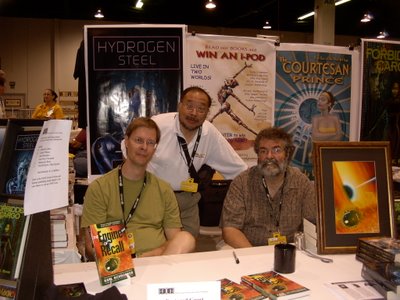
The highlight so far is captured in this photograph which shows (left to right) Karl Schroeder, me, and Jean-Pierre Normand, taken at the Edge Publishers table in the Dealer's Room. Karl is seated behind a copy of his short story collection The Engine of Recall, for which Jean-Pierre did the cover art.
UPDATE: The 2006 Hugo Awards were given out on Saturday night. This is a partial list:
Best Novel - Robert Charles Wilson for Spin from Tor Books -- a well deserved victory, and doubly sweet since Bob Wilson is from Toronto (although he now lives on the West Coast)
Best Novella - Connie Willis for Inside Job, published in Asimov's January 2005
Best Novellette - Peter S. Beagle for Two Hearts, published in F&SF October/November 2005
Best Short Story - David D. Levine for Tk'tk'tk, published in Asimov's Asimov's 2005
Best Dramatic Presentation, Long Form - Serenity (Universal Pictures/Mutant Ennemy, Inc.) Written and Directed by Joss Whedon
John Scalzi won the Campbell Award for Best New Writer, in his first year of eligibility. Again, well deserved. Note - if Scalzi is an A-list blogger, then I most likely don't even make the scale!
Someone else will undoubtedly put the full list up soon, but these are the highlights.
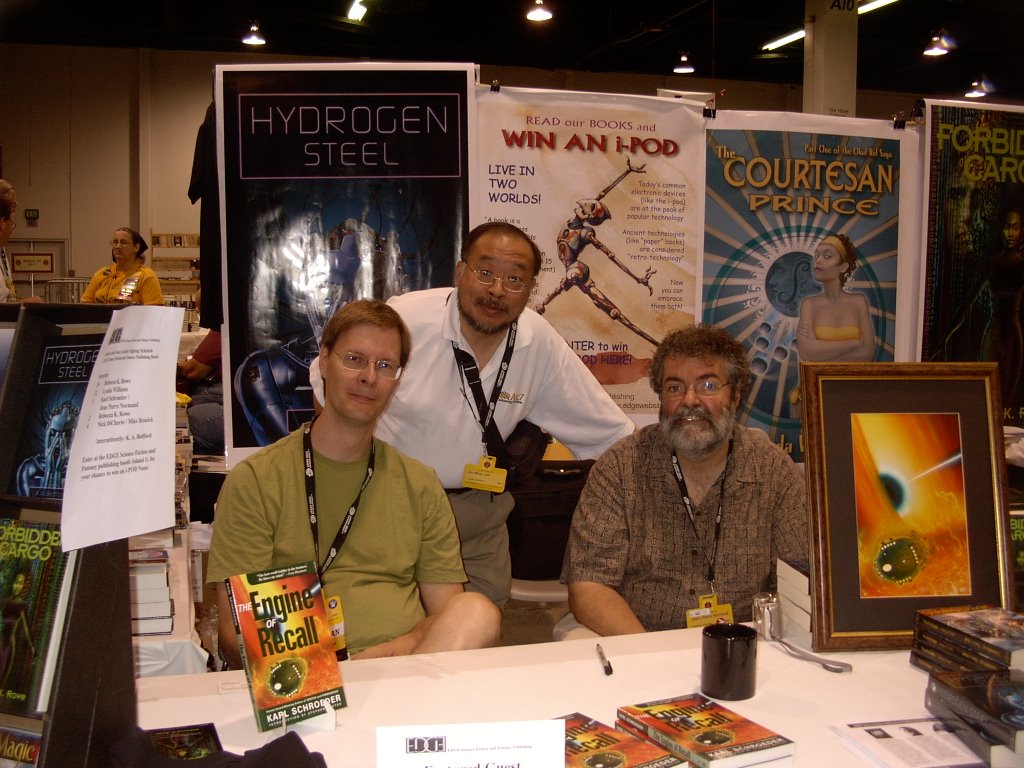
The highlight so far is captured in this photograph which shows (left to right) Karl Schroeder, me, and Jean-Pierre Normand, taken at the Edge Publishers table in the Dealer's Room. Karl is seated behind a copy of his short story collection The Engine of Recall, for which Jean-Pierre did the cover art.
UPDATE: The 2006 Hugo Awards were given out on Saturday night. This is a partial list:
Best Novel - Robert Charles Wilson for Spin from Tor Books -- a well deserved victory, and doubly sweet since Bob Wilson is from Toronto (although he now lives on the West Coast)
Best Novella - Connie Willis for Inside Job, published in Asimov's January 2005
Best Novellette - Peter S. Beagle for Two Hearts, published in F&SF October/November 2005
Best Short Story - David D. Levine for Tk'tk'tk, published in Asimov's Asimov's 2005
Best Dramatic Presentation, Long Form - Serenity (Universal Pictures/Mutant Ennemy, Inc.) Written and Directed by Joss Whedon
John Scalzi won the Campbell Award for Best New Writer, in his first year of eligibility. Again, well deserved. Note - if Scalzi is an A-list blogger, then I most likely don't even make the scale!
Someone else will undoubtedly put the full list up soon, but these are the highlights.
Friday, August 25, 2006
Pluto - A Planet No Longer
At the IAU conference in Prague, Czechoslovakia this week, astronomers voted to reclassify Pluto into a new category of solar system object -- a dwarf planet. This class of objects would include Pluto, Sedna, Quaoar, and the recently discovered 2003 UB313 (Xena).
While I understand why it happened, I am sorry that astronomers reached this particular decision. The reaction that I most like is the bumper sticker from Cafe Press that says "Honk If Pluto Is Still A Planet".
Pluto was discovered by Clyde Tombaugh in 1930, and for the last 75 years, has been part of the cultural consciousness of what defines the Solar System. It will be a while before popular culture catches up to the new definition.
Something similar happened in the nineteenth century. Ceres was discovered on January 1, 1801, and was declared to be a new planet. But it was soon realized that Ceres was the first of many similar objects. By the 1850s, astronomers had defined and named that new class of solar system objects -- asteroids -- and relegated Ceres, Pallas, Vesta, and all the other small objects discovered between the orbits of Mars and Jupiter to be members of this new group.
In the current view, Pluto was the first trans-Neptunian dwarf planet discovered. As technology -- both optical and sensor -- improved after the launch of the Hubble Space Telescope, more of these trans-Neptunian Kuiper Belt objects were found, and the current view is that there may well be thousands. Hence, the need to redefine and recategorize.
Regardless of the arguments and quibbling of astronomers, the New Horizons space probe continues on its way to Pluto. Launched on 19 January 2006 from Cape Canaveral, New Horizons crossed the Moon's orbit before midnight that day, aimed for a Jupiter flyby in February 2007 and ultimately, a flyby of the Pluto/Charon dwarf planet system in July of 2015. When that is completed, the initial reconnaissance of the major bodies in the Solar System, as known in the twentieth century, will be completed.
While I understand why it happened, I am sorry that astronomers reached this particular decision. The reaction that I most like is the bumper sticker from Cafe Press that says "Honk If Pluto Is Still A Planet".
Pluto was discovered by Clyde Tombaugh in 1930, and for the last 75 years, has been part of the cultural consciousness of what defines the Solar System. It will be a while before popular culture catches up to the new definition.
Something similar happened in the nineteenth century. Ceres was discovered on January 1, 1801, and was declared to be a new planet. But it was soon realized that Ceres was the first of many similar objects. By the 1850s, astronomers had defined and named that new class of solar system objects -- asteroids -- and relegated Ceres, Pallas, Vesta, and all the other small objects discovered between the orbits of Mars and Jupiter to be members of this new group.
In the current view, Pluto was the first trans-Neptunian dwarf planet discovered. As technology -- both optical and sensor -- improved after the launch of the Hubble Space Telescope, more of these trans-Neptunian Kuiper Belt objects were found, and the current view is that there may well be thousands. Hence, the need to redefine and recategorize.
Regardless of the arguments and quibbling of astronomers, the New Horizons space probe continues on its way to Pluto. Launched on 19 January 2006 from Cape Canaveral, New Horizons crossed the Moon's orbit before midnight that day, aimed for a Jupiter flyby in February 2007 and ultimately, a flyby of the Pluto/Charon dwarf planet system in July of 2015. When that is completed, the initial reconnaissance of the major bodies in the Solar System, as known in the twentieth century, will be completed.
Saturday, July 29, 2006
The Best Definition of Success...
...is how your child describes you to a friend.
An observation made on Thomas Barnett's blog that I agree with.
An observation made on Thomas Barnett's blog that I agree with.
Sunday, July 23, 2006
My Secret Reading Vice
Okay, so perhaps it's not so secret. But made you look!
Ever since I was a kid, I have loved comic books. Comic books were one of my early motivations in learning to read. I have a childhood memory from Grade 6, of an assignment from a teacher who understood the opportunity inherent in the number of comic books in evidence in his classroom. He required us to each pick one, and retell the story, focusing especially on written descriptions of the action happening on each page, in each panel. At the time, I thought of it as a better than average Reading assignment, but it never occurred to me that I could devote further analytical thought to comic books in general.
My first awareness of comics as something that mattered came when I read Lupoff and Thompson's "All In Color For A Dime" when I was 12 or 13. This book made me aware that comics had a history, and is probably the influence that made me start collecting them, as opposed to merely reading them.
My own collection extends back into the 50s (only a few examples, and all mostly cowboy comics), has some representation through the 1960s and early 70s, becomes fairly strong (at least as far as mainstream publications) in the late 70s and most of the 80s. By the time I met Jill in 1990, I had stopped regularly buying comic books. This happened for sseveral reasons -- first, available time became a semantically null concept as far as my own life was concerned; second, simple economics dictated other priorities; third, most importantly, I lost interest.
However, I have always resisted the notion of selling off my comics. Too many hours of personal history are tied up in those multi-coloured pages.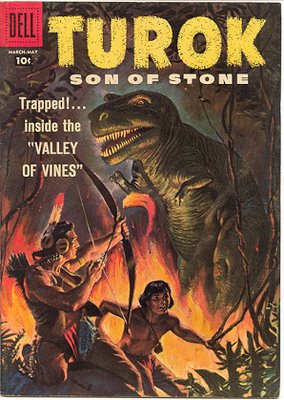
So therefore, it was a pleasure to find a web site that has thousands of comic book covers, many from books that I remember reading.
I am now an occasional comic book buyer. Prices are the most noticeable thing. How do kids afford comics today? The answer is that they probably don't -- the comic book market has shifted so that target audiences are mostly adults, rather than entirely for children. This is probably a development which would not have been anticipated, fifty years ago at the height of the anti-comics frenzy.
My son learned to read over the last year and a half, and I see some aspects of my own early reading experience repeating themselves. Corwin has gotten to the point where he can figure out a hitherto new word, all on his own. This last week, he could often be found with his nose buried inside a copy of "Teen Titans Go!" or the "Star Wars: Rogue Squadron" graphic novel. My nice warm feeling comes when I know that it took no effort to get him to read, and his reading is motivated by his own interest. How much better than that does it get??
An earlier geeneration, indoctrinated by the wrong-headedness of Fredric Wertham, would undoubtedly brand me as a Bad Parent for deliberately exposing my child to the corrupting influence of comic books. Nice to be able to relegate Wertham's views to being a msitake of history.
Ever since I was a kid, I have loved comic books. Comic books were one of my early motivations in learning to read. I have a childhood memory from Grade 6, of an assignment from a teacher who understood the opportunity inherent in the number of comic books in evidence in his classroom. He required us to each pick one, and retell the story, focusing especially on written descriptions of the action happening on each page, in each panel. At the time, I thought of it as a better than average Reading assignment, but it never occurred to me that I could devote further analytical thought to comic books in general.
My first awareness of comics as something that mattered came when I read Lupoff and Thompson's "All In Color For A Dime" when I was 12 or 13. This book made me aware that comics had a history, and is probably the influence that made me start collecting them, as opposed to merely reading them.
My own collection extends back into the 50s (only a few examples, and all mostly cowboy comics), has some representation through the 1960s and early 70s, becomes fairly strong (at least as far as mainstream publications) in the late 70s and most of the 80s. By the time I met Jill in 1990, I had stopped regularly buying comic books. This happened for sseveral reasons -- first, available time became a semantically null concept as far as my own life was concerned; second, simple economics dictated other priorities; third, most importantly, I lost interest.
However, I have always resisted the notion of selling off my comics. Too many hours of personal history are tied up in those multi-coloured pages.
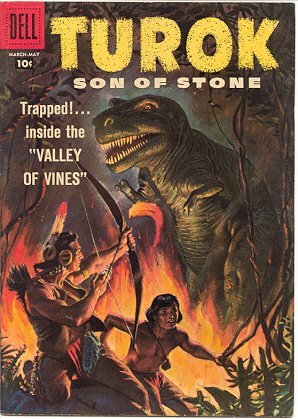
So therefore, it was a pleasure to find a web site that has thousands of comic book covers, many from books that I remember reading.
I am now an occasional comic book buyer. Prices are the most noticeable thing. How do kids afford comics today? The answer is that they probably don't -- the comic book market has shifted so that target audiences are mostly adults, rather than entirely for children. This is probably a development which would not have been anticipated, fifty years ago at the height of the anti-comics frenzy.
My son learned to read over the last year and a half, and I see some aspects of my own early reading experience repeating themselves. Corwin has gotten to the point where he can figure out a hitherto new word, all on his own. This last week, he could often be found with his nose buried inside a copy of "Teen Titans Go!" or the "Star Wars: Rogue Squadron" graphic novel. My nice warm feeling comes when I know that it took no effort to get him to read, and his reading is motivated by his own interest. How much better than that does it get??
An earlier geeneration, indoctrinated by the wrong-headedness of Fredric Wertham, would undoubtedly brand me as a Bad Parent for deliberately exposing my child to the corrupting influence of comic books. Nice to be able to relegate Wertham's views to being a msitake of history.
Saturday, July 22, 2006
Return to the Moon -- Orion/Ares

Back in the late 1950s/1960s, Freeman Dyson worked on a theoretical study called Project Orion -- a concept for a nuclear pulse propulsion system.
Now, NASA has revived the Orion name for the Crew Exploration Vehicle, the spacecraft which will be the successor to the space shuttle.
Unfortunately, this new Orion will not be nuclear-pulse powered. Instead, it will be sent into space using an expendable launch vehicle.
The launcher will be named "Ares". The NASA illustration shows the two configurations -- the Ares I crew launch system on the right, and the Ares V heavy lift cargo launcher on the left. Ares is the Greek god associated with Mars, and the "I" and "V" designations pay homage to the Apollo-era Saturn I and Saturn V rockets.
The Ares I launcher will be used to put an Orion into orbit. The Ares V heavy lift system will be used to boost space station components or the hardware elements of a lunar mission into space.
 It is clear from the illustrations that the Ares launcher is an evolved version of the space shuttle solid rocket booster and fuel tank system. Similarly, Orion is recognizably an enhanced version of the Apollo Command and Service Module combination.
The obvious comment is that this sytem is an extension of the 1950s brute force approach to getting out of the atmosphere. The romance of the rocket lives on, tinged with regret over what might have been.
Brute force rocket launches are what NASA -- and indeed every other space agency in the world -- knows how to do. The Orion/Ares combination may in fact return Americans and their international partners to the Moon. It may even take them to Mars.
But a true future in space requires that the price to send a kilogram of cargo into orbit be dropped from the current level of thousands to tens of thousands of dollars down to hundreds of dollars or less. Rockets are likely not the answer to achieve this goal, although systems like Orion/Ares need to be implemented until alternatives can be developed.
Friday, July 21, 2006
Charters (aka the humanitarian)...
..is a new play produced by my cousin, Wayne Sujo.
The play is part of the Summerworks festival in early August.
We last saw Wayne perform on stage at Stratford a couple of years ago, and of course, he was in Iron Road a few years back. Note -- We've also seen him more recently -- just not on stage :-) It is great that his career is expanding in new directions -- being the "producer" of a play must be a lot different, and probably a lot scarier, than being an "actor".
Charters (aka the humanitarian) is on at the Factory Studio Theatre on Bathurst Street at Adelaide, on August 5, 7, 8, 10, 11, and 12. See their website for times of performances.
Update: Wayne mentioned in an e-mail that he received an offer last week from Canstage to be one of 3 actors in the World Premiere of Morris Panych’s play What Lies Before Us.
Wayne's involvement is from December 11 – April 15. The play travels from Toronto to Winnipeg to Edmonton.
Here are the links to the Winnipeg and Edmonton venues:
the Manitoba Theatre Company
the Citadel theatre in Edmonton
This is the Canstage blurb about What Lies Before Us:
I could be wrong here, but I am going to guess that Wayne is playing the role of Wing, the Chinese cook :-)
Break a leg, Wayne!
The play is part of the Summerworks festival in early August.
We last saw Wayne perform on stage at Stratford a couple of years ago, and of course, he was in Iron Road a few years back. Note -- We've also seen him more recently -- just not on stage :-) It is great that his career is expanding in new directions -- being the "producer" of a play must be a lot different, and probably a lot scarier, than being an "actor".
Charters (aka the humanitarian) is on at the Factory Studio Theatre on Bathurst Street at Adelaide, on August 5, 7, 8, 10, 11, and 12. See their website for times of performances.
Update: Wayne mentioned in an e-mail that he received an offer last week from Canstage to be one of 3 actors in the World Premiere of Morris Panych’s play What Lies Before Us.
Wayne's involvement is from December 11 – April 15. The play travels from Toronto to Winnipeg to Edmonton.
Here are the links to the Winnipeg and Edmonton venues:
the Manitoba Theatre Company
the Citadel theatre in Edmonton
This is the Canstage blurb about What Lies Before Us:
It’s 1835 and Ambrose and Keating, two junior surveyors, are lost in the Canadian Rockies with Wing, the Chinese cook. As the snow begins to fall, the men’s discussion of colonialism, women, faith and the future, descend into petty and hilarious squabbles. What Lies Before Us is another brilliant trip from twotime Governor General’s Award winner Morris Panych. What Lies Before Us is a darkly comic look at man, mountains and the meaning of life.
I could be wrong here, but I am going to guess that Wayne is playing the role of Wing, the Chinese cook :-)
Break a leg, Wayne!
Pimp My Ride
On the subject of being a Star Trek geek, as noted in my previous post, here is a bit of silliness from Allan Goodall's blog.
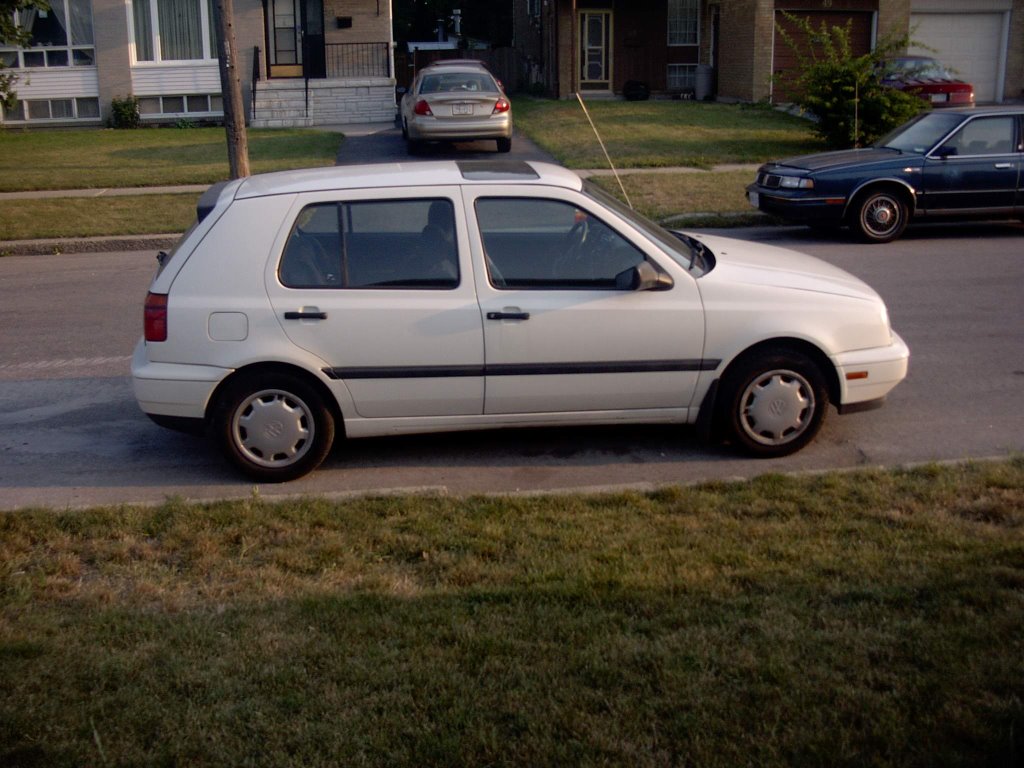
Update - here is a photo of my car, just to demonstrate that it isn't as, ahem, nicely decorated as the vehicle that Allan has displayed on his site.
So whaddaya think? White paint, then red racing stripes down the sides, a Starfleet logo...?
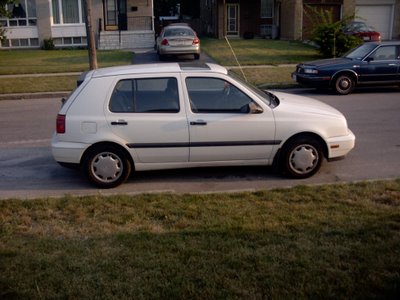
Update - here is a photo of my car, just to demonstrate that it isn't as, ahem, nicely decorated as the vehicle that Allan has displayed on his site.
So whaddaya think? White paint, then red racing stripes down the sides, a Starfleet logo...?
Thursday, July 20, 2006
Moon Landing Day
Today is the anniversary of the Apollo 11 moon landing on July 20, 1969. Back then, it seemed certain that a revolution in space travel was about to happen -- first the moon, then Mars -- and with a few scientific and engineering breakthroughs, perhaps even Alpha Centauri and the galaxy beyond would be within reach. It was a Star Trek geek's dream.
But alas, such was not to happen. The cost -- in energy, in dollars -- of getting people and equipment the first 200 kilometers up into Low Earth Orbit was and continues to be the biggest obstacle hindering the development of humanity's future in space. It is sad to think that the current plans for returning to the moon aren't based on any substantive technological advance beyond what was used for Project Apollo.
In this NASA archival photo, Astronaut Neil A. Armstrong, Apollo ll mission commander, works at the modular equipment storage assembly (MESA) of the Lunar Module Eagle on the historic first extravehicular activity (EVA) on the lunar surface. The moonwalk began at 22:56 EDT on July 20, 1969 when Armstrong stepped onto the Moon, the first human being to set foot onto another world. Astronaut Buzz Aldrin followed a few minutes later. Aldrin took this photograph with a Hasselblad 70mm camera.
Most astronaut photos from the Apollo 11 mission show Buzz Aldrin. This is one of only a few that show Neil Armstrong (some of these are blurry).
The third member of the crew, Astronaut Michael Collins, remained in lunar orbit in the Command Module Columbia.
When we think of the Wright Brothers, we see their first flight as a first step in massive technological and social development that built on what they achieved and extended it further. When we think of Armstrong, Aldrin and Collins, we remember them as the ones who were first to a place to where we have lost the ability to return. My hope is that we all live long enough to think about Armstrong, Aldrin and Collins in the same way that we think about the Wright Brothers.
But alas, such was not to happen. The cost -- in energy, in dollars -- of getting people and equipment the first 200 kilometers up into Low Earth Orbit was and continues to be the biggest obstacle hindering the development of humanity's future in space. It is sad to think that the current plans for returning to the moon aren't based on any substantive technological advance beyond what was used for Project Apollo.
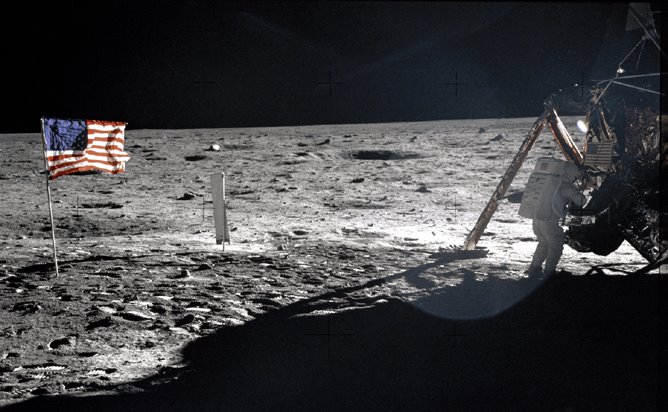
In this NASA archival photo, Astronaut Neil A. Armstrong, Apollo ll mission commander, works at the modular equipment storage assembly (MESA) of the Lunar Module Eagle on the historic first extravehicular activity (EVA) on the lunar surface. The moonwalk began at 22:56 EDT on July 20, 1969 when Armstrong stepped onto the Moon, the first human being to set foot onto another world. Astronaut Buzz Aldrin followed a few minutes later. Aldrin took this photograph with a Hasselblad 70mm camera.
Most astronaut photos from the Apollo 11 mission show Buzz Aldrin. This is one of only a few that show Neil Armstrong (some of these are blurry).
The third member of the crew, Astronaut Michael Collins, remained in lunar orbit in the Command Module Columbia.
When we think of the Wright Brothers, we see their first flight as a first step in massive technological and social development that built on what they achieved and extended it further. When we think of Armstrong, Aldrin and Collins, we remember them as the ones who were first to a place to where we have lost the ability to return. My hope is that we all live long enough to think about Armstrong, Aldrin and Collins in the same way that we think about the Wright Brothers.
Wednesday, July 19, 2006
The Kids of Summer
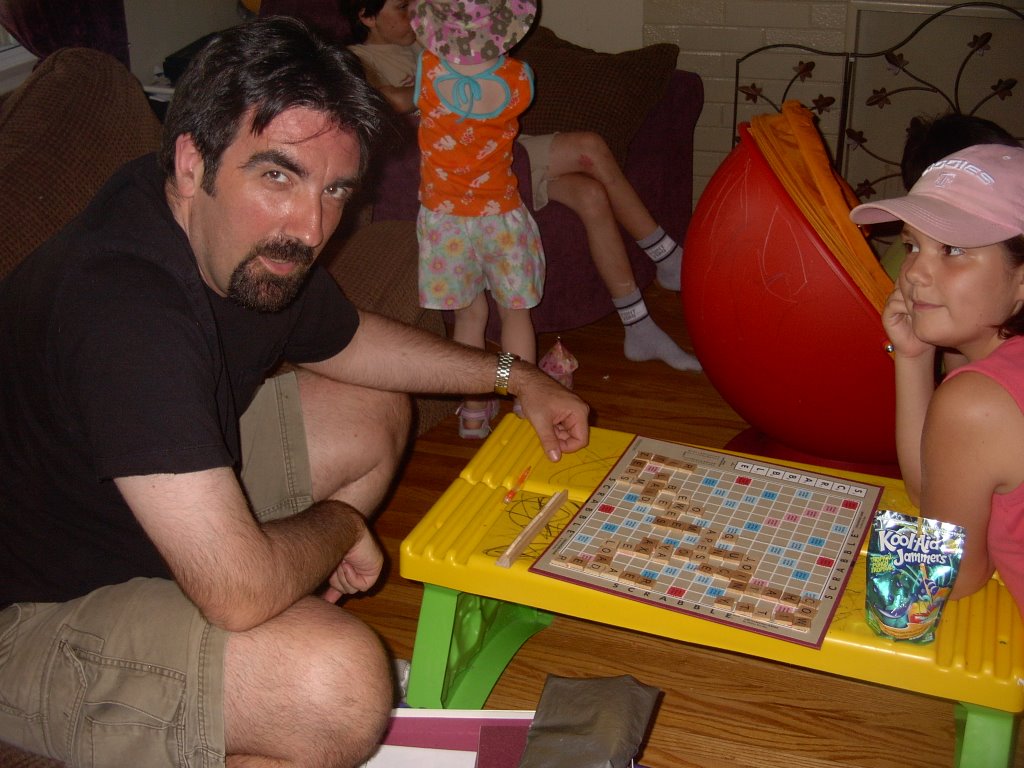
In order to fulfill my ongoing ambition of being a Bad Influence, I ensured that Brie had an opportunity to play Scrabble for money. This happened during the All Barbecue All The Time weekend at the end of June.
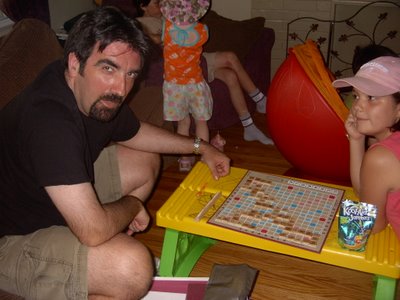
My intention of having Brie fund my retirement with her Scrabble winnings didn't pan out, unfortunately. Brie went home at the beginning of July, having spent two weeks with us.
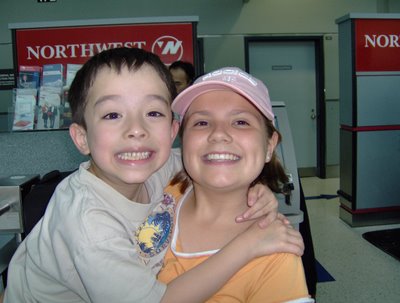
The following week, we accepted a refugee application from Robert, who needed time away from his parents in a high intensity science fiction environment. And where the heck would he go for that but to us???
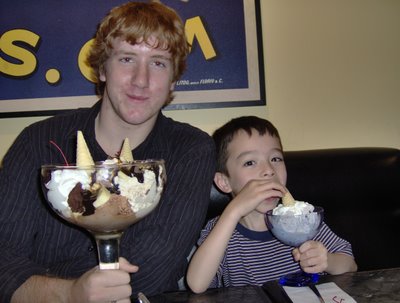
We took shameless advantage of the presence of both Brie and Robert to not do much cooking. Robert's visit culminated with a trip down to the Danforth for a Greek meal at Mezes, followed by dessert at Demetre's. Note the large container of ice cream, somewhat larger than the kid's head. The funny thing about the sundae is that Jill was away from the table, and I had taken Corwin to the washroom when the waiter came and took the dish away. We gave Robert a hard time for not being able to prove that he had actually finished it!
However, all good things come to an end. Robert's mother, Elaine, whom we had missed seeing at the Mid Year Barbecue, came to retrieve her son. The penultimate event of Robert's visit was an evening at Medievel Times. The next day was Robert's birthday. After a buffet lunch pig-out that could only happen with a sixteen year old boy, Robert and his mother headed home.
Poor Corwin misses not having his buddies around!
My intention of having Brie fund my retirement with her Scrabble winnings didn't pan out, unfortunately. Brie went home at the beginning of July, having spent two weeks with us.

The following week, we accepted a refugee application from Robert, who needed time away from his parents in a high intensity science fiction environment. And where the heck would he go for that but to us???
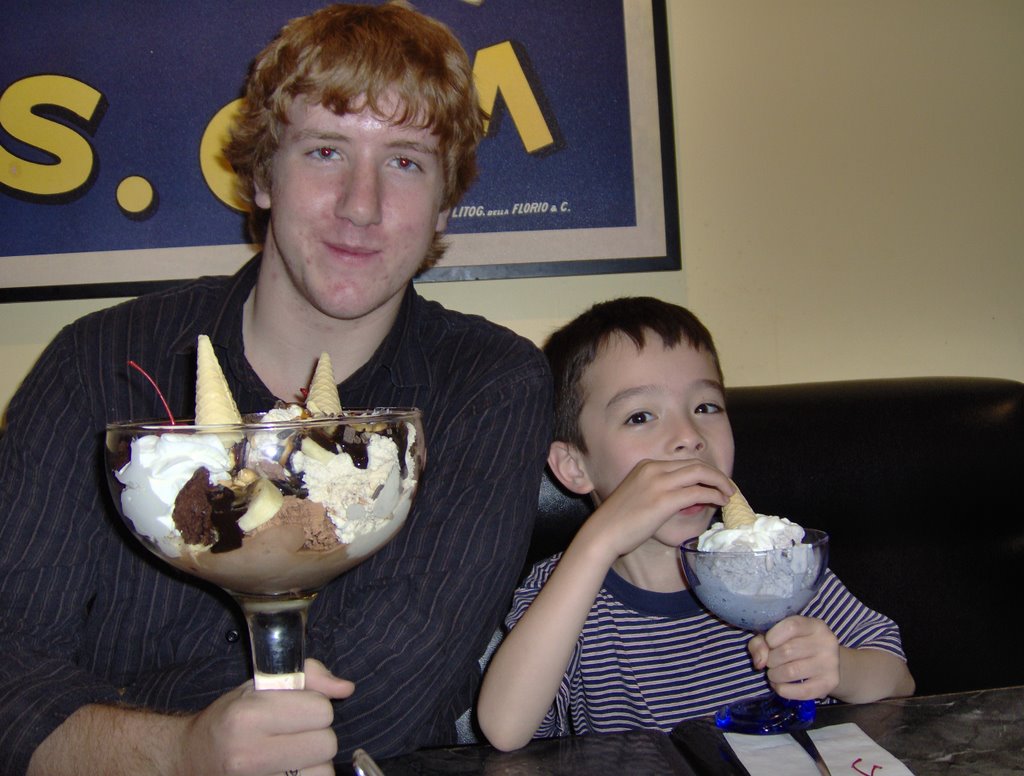
We took shameless advantage of the presence of both Brie and Robert to not do much cooking. Robert's visit culminated with a trip down to the Danforth for a Greek meal at Mezes, followed by dessert at Demetre's. Note the large container of ice cream, somewhat larger than the kid's head. The funny thing about the sundae is that Jill was away from the table, and I had taken Corwin to the washroom when the waiter came and took the dish away. We gave Robert a hard time for not being able to prove that he had actually finished it!
However, all good things come to an end. Robert's mother, Elaine, whom we had missed seeing at the Mid Year Barbecue, came to retrieve her son. The penultimate event of Robert's visit was an evening at Medievel Times. The next day was Robert's birthday. After a buffet lunch pig-out that could only happen with a sixteen year old boy, Robert and his mother headed home.
Poor Corwin misses not having his buddies around!
Sunday, July 16, 2006
A Cousin Discovered, Old Memories, and Glimpses of Family History
This month, the Government of Canada apologized for the head tax on Chinese immigrants imposed between 1885 and 1923. I've never thought much about the head tax, and when I did, it was a topic flagged Ancient History - Not Applicable to Me. However, the head tax, and the Chinese Exclusion Act which followed it, very likely shaped the way my family's history evolved.
Some of this history became clearer when I got an e-mail earlier this month from a man named Tak Chow in Florida, identifying himself as a cousin on my father's side of the family.
Tak had been googling "Lichee Garden", part of a search for relatives of Harry Lem, owner of the Lichee Garden restaurant in Toronto. One of the hits that he got was my father's obituary.
As he read the article, Tak concluded that his family and mine were related. He e-mailed me and we corresponded and spoke on the phone. Based on the e-mails, the phone conversation, some discussions with my mother, and some thought, this is a summary of some family history. Getting this information has been an evolutionary process, and the history is subject to revision.
My great grandfather, Lum Goey Hien, had an older brother. Goey Hien's nephew, son of his brother, was named Lum Sen Hong. Sen Hong was married in Hong Kong, and among other children, had a daughter -- Lum Hay Chun, who married a man named Chow, and who had two sons and a daughter -- with the younger of the two sons being my cousin Tak Chow, born in 1952.
Lum Goey Hien and his brother came to Canada in the early part of the twentieth century, as did young Sen Hong. All three of them would have paid the head tax to enter the country. Lum Sen Hong took the English name Harry Lem. All this happened before the Chinese Exclusion Act stopped Chinese immigration to Canada between 1923 to 1947. My hunch (completely unsubstantiated) is that they arrived in the 1916 to 1919 range, when the demand for Chinese labourers caused the immigration rate to briefly increase. Like all other Chinese immigrants of the time, the Chinese Exclusion Act would have prevented the three of them from bringing the rest of their families to Canada.
In Toronto, Goey Hien spent some time in jail, having run afoul of the law over an unlicensed distillery and its output. Sen Hong spoke to the authorities on his behalf, and was involved in the process which got him out of jail. For this, Goey Hien forever after spoke of Sen Hong as his smart, clever nephew.
Lum Sen Hong -- Harry Lem -- became a successful businessman in Canada, and even married again. There are no sources that can speak to how he felt about his first family, left behind in Hong Kong. The Lichee Garden restaurant which he started in the late 1940s would become famous. In the 1950s, for a time my father worked there, earning the princely sum of $15 a week. In later years, Sen Hong was involved in the local organization of the Lum Si Ho Tong society -- the Lum family association.
My father, Lum Suey Chong, was born in 1931, son of Lum Yoey Nien, who was the eldest, but adopted, son of Lum Goey Hien. Yoey Nien and Sen Hong were therefore adoptive cousins. Yoey Nien never returned home after going to fight the Japanese in the aftermath of the invasion of China in the late 1930s.
The fact that my grandfather -- my father's father -- was adopted into the Lum family is something that I only discovered today, in conversation with my mother. I am still assimilating this datum.
After the Chinese Exclusion Act was repealed in 1947, my father joined his grandfather, Lum Goey Hien, in northern BC in 1950.
My mother left the family home village in 1957 and made her way to Hong Kong via Macau. In Hong Kong, she stayed with Hay Chun and her husband. At the time, they lived in Shau Kee Wan. Hay Chun and her husband, two sons (Tak and his brother), Hay Chun's mother (Sen Hong's first wife), and Hay Chun's brother's wife and young son -- seven people, eight counting my mother, in one flat. My father and Hay Chun would have been second cousins, but my father would have addressed Hay Chun as "elder sister" because of the difference in their ages.
Tak was 5 in 1957, approximately the same age as his cousin. His brother would have been a couple of years older. Tak remembers my mother as a shy young woman who looked after him and played with him and was his buddy. My mother was there for three months before she came to Canada. She remembers Tak and his brother as two small, energetic boys, and forty nine years later was amazed that Tak would remember her.
As I have written in the story of my father's life, Goey Hien walked out of our lives in the early 1960s to retire to Hong Kong. Growing up, I had always imagined that he lived out his remaining days in splendour, but the reality was probably a less crowded version of the flat in Shau Kee Wan. Word came to us some years later that the old man had said that my father was an ungrateful wretch who did not appreciate what had been done for him. My father was so enraged by this that it very likely prevented the two of them from ever reconciling.
The last vestiges of the Chinese Exclusion Act were repealed in 1967, the year my family moved to Wonowon. This helped to pave the way for my grandmother coming from Hong Kong to join us in the late 1960s.
Tak attended school at Iowa State University in the 1970s. His education in America was made possible by Lum Sen Hong. In Hong Kong in the early 1980s, Tak attended the funeral of my great grandfather Lum Goey Hien. When Goey Hien passed away, he was in his 90s.
Sometime in the 1980s or 1990s, Lum Sen Hong also passed away.
In May 2005, Tak and his parents visited Toronto, to visit the grave of Lum Sen Hong, to finally close this chapter of their family history that had begun so many years earlier.
Following Tak's initial contact with me, my mother and Hay Chun spoke on the telephone, in the first of what I hope will be many conversations.
As my dialogue with my newly discovered cousin has progressed, I continue to marvel at how things and people and events are connected -- and how events nearly a century ago still echo through my life and those of my family -- all of them, no matter who and where they may be.
Some of this history became clearer when I got an e-mail earlier this month from a man named Tak Chow in Florida, identifying himself as a cousin on my father's side of the family.
Tak had been googling "Lichee Garden", part of a search for relatives of Harry Lem, owner of the Lichee Garden restaurant in Toronto. One of the hits that he got was my father's obituary.
As he read the article, Tak concluded that his family and mine were related. He e-mailed me and we corresponded and spoke on the phone. Based on the e-mails, the phone conversation, some discussions with my mother, and some thought, this is a summary of some family history. Getting this information has been an evolutionary process, and the history is subject to revision.
My great grandfather, Lum Goey Hien, had an older brother. Goey Hien's nephew, son of his brother, was named Lum Sen Hong. Sen Hong was married in Hong Kong, and among other children, had a daughter -- Lum Hay Chun, who married a man named Chow, and who had two sons and a daughter -- with the younger of the two sons being my cousin Tak Chow, born in 1952.
Lum Goey Hien and his brother came to Canada in the early part of the twentieth century, as did young Sen Hong. All three of them would have paid the head tax to enter the country. Lum Sen Hong took the English name Harry Lem. All this happened before the Chinese Exclusion Act stopped Chinese immigration to Canada between 1923 to 1947. My hunch (completely unsubstantiated) is that they arrived in the 1916 to 1919 range, when the demand for Chinese labourers caused the immigration rate to briefly increase. Like all other Chinese immigrants of the time, the Chinese Exclusion Act would have prevented the three of them from bringing the rest of their families to Canada.
In Toronto, Goey Hien spent some time in jail, having run afoul of the law over an unlicensed distillery and its output. Sen Hong spoke to the authorities on his behalf, and was involved in the process which got him out of jail. For this, Goey Hien forever after spoke of Sen Hong as his smart, clever nephew.
Lum Sen Hong -- Harry Lem -- became a successful businessman in Canada, and even married again. There are no sources that can speak to how he felt about his first family, left behind in Hong Kong. The Lichee Garden restaurant which he started in the late 1940s would become famous. In the 1950s, for a time my father worked there, earning the princely sum of $15 a week. In later years, Sen Hong was involved in the local organization of the Lum Si Ho Tong society -- the Lum family association.
My father, Lum Suey Chong, was born in 1931, son of Lum Yoey Nien, who was the eldest, but adopted, son of Lum Goey Hien. Yoey Nien and Sen Hong were therefore adoptive cousins. Yoey Nien never returned home after going to fight the Japanese in the aftermath of the invasion of China in the late 1930s.
The fact that my grandfather -- my father's father -- was adopted into the Lum family is something that I only discovered today, in conversation with my mother. I am still assimilating this datum.
After the Chinese Exclusion Act was repealed in 1947, my father joined his grandfather, Lum Goey Hien, in northern BC in 1950.
My mother left the family home village in 1957 and made her way to Hong Kong via Macau. In Hong Kong, she stayed with Hay Chun and her husband. At the time, they lived in Shau Kee Wan. Hay Chun and her husband, two sons (Tak and his brother), Hay Chun's mother (Sen Hong's first wife), and Hay Chun's brother's wife and young son -- seven people, eight counting my mother, in one flat. My father and Hay Chun would have been second cousins, but my father would have addressed Hay Chun as "elder sister" because of the difference in their ages.
Tak was 5 in 1957, approximately the same age as his cousin. His brother would have been a couple of years older. Tak remembers my mother as a shy young woman who looked after him and played with him and was his buddy. My mother was there for three months before she came to Canada. She remembers Tak and his brother as two small, energetic boys, and forty nine years later was amazed that Tak would remember her.
As I have written in the story of my father's life, Goey Hien walked out of our lives in the early 1960s to retire to Hong Kong. Growing up, I had always imagined that he lived out his remaining days in splendour, but the reality was probably a less crowded version of the flat in Shau Kee Wan. Word came to us some years later that the old man had said that my father was an ungrateful wretch who did not appreciate what had been done for him. My father was so enraged by this that it very likely prevented the two of them from ever reconciling.
The last vestiges of the Chinese Exclusion Act were repealed in 1967, the year my family moved to Wonowon. This helped to pave the way for my grandmother coming from Hong Kong to join us in the late 1960s.
Tak attended school at Iowa State University in the 1970s. His education in America was made possible by Lum Sen Hong. In Hong Kong in the early 1980s, Tak attended the funeral of my great grandfather Lum Goey Hien. When Goey Hien passed away, he was in his 90s.
Sometime in the 1980s or 1990s, Lum Sen Hong also passed away.
In May 2005, Tak and his parents visited Toronto, to visit the grave of Lum Sen Hong, to finally close this chapter of their family history that had begun so many years earlier.
Following Tak's initial contact with me, my mother and Hay Chun spoke on the telephone, in the first of what I hope will be many conversations.
As my dialogue with my newly discovered cousin has progressed, I continue to marvel at how things and people and events are connected -- and how events nearly a century ago still echo through my life and those of my family -- all of them, no matter who and where they may be.
Tuesday, June 27, 2006
Mid Year Dim Sum Aftermath
More often than not, we've gone for some variation on breakfast the morning after the Mid Year Barbecue. There have been notable exceptions -- such as 2005, when the majority of the Lum clan were sick with the heaving awfuls.
This year, fortunately, there were no stomach bug episodes for anyone.
The Mid Year Barbecue ended around midnight on Saturday. Bob and I traded children -- Brie went for a sleepover with Lisa at the hotel where Lisa and Bob were staying. In exchange, we acquired Robert, who wanted some up-close in-depth hands-on with Quake 4. And of course, we were just the guys to let him do that.
Robert admits to crashing some time around 3am.
Next morning, Jill, Corwin, and I were up by 9:30. Shortly after that, Robert, confronted with Corwin's morning cheerfulness, got up in self-defence. Then Bob called to say that the girls were going for a swim, and they would all eventually get here.
There was time for some barbecue cleanup, virtually all of which Jill did, because I was zoned out. We collected our neighbour Pam shortly after 11, when Bob, Lisa, and Brie descended upon us. After limited debate, we made off for the place formerly known as New World for dim sum.
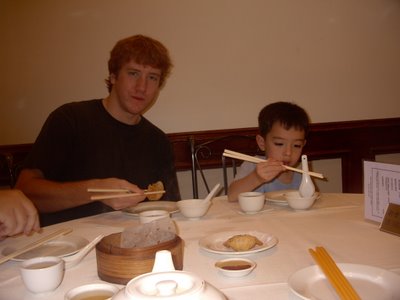
According to the menu, what was once New World is now Empire Oriental Cuisine, but this is subject to my faulty memory. Might have to go back to verify all this. The food and decor is much the same.
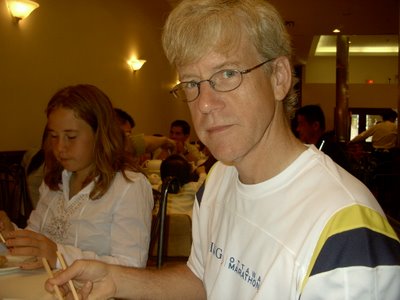
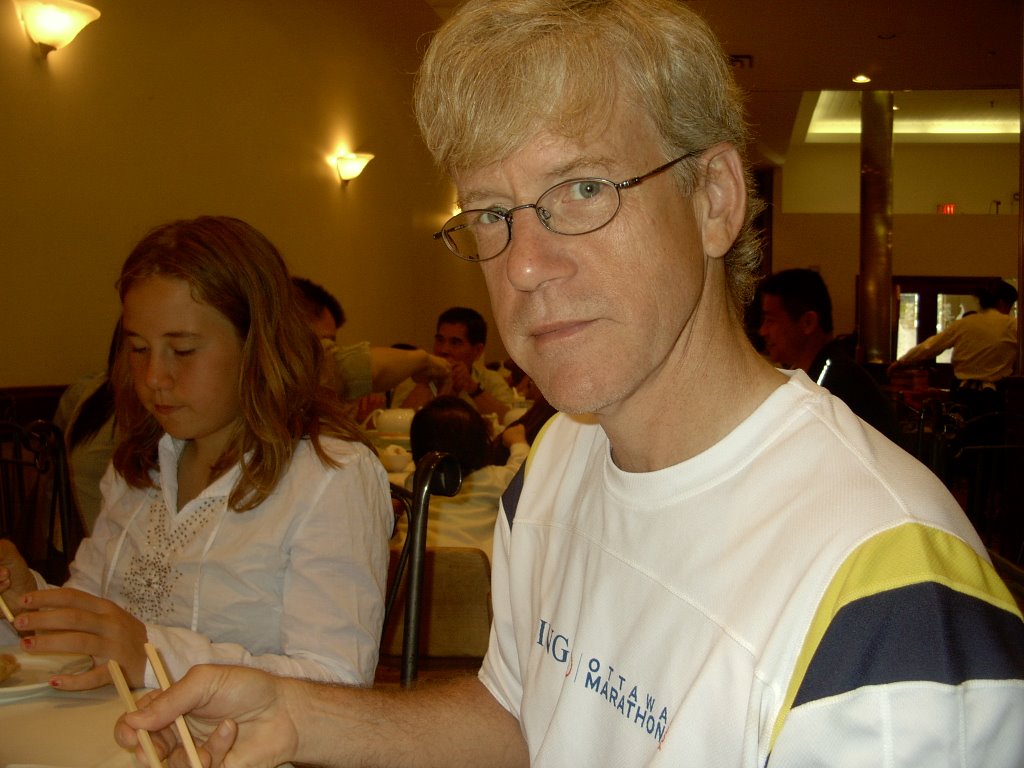
In the first photo, you see Robert and Corwin looking much too happy.
We had an ideal spot -- right beside the kitchen, so all the dim sum carts had to pass us.
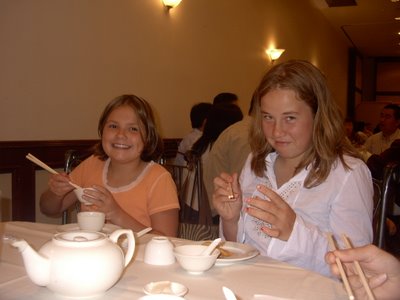
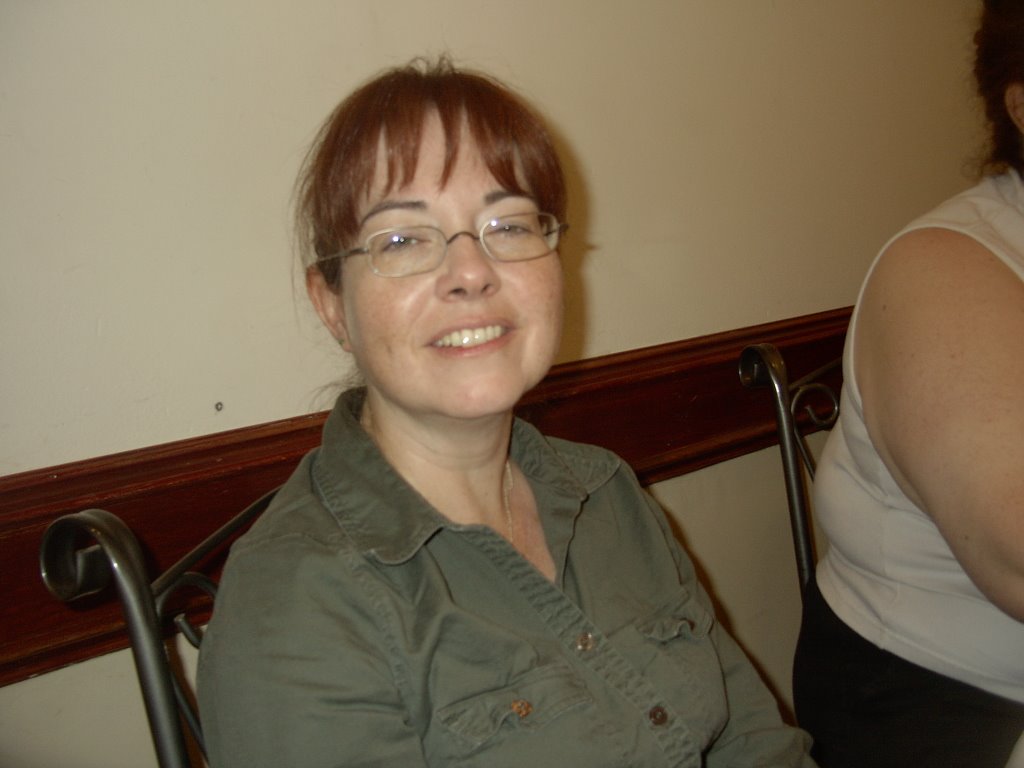
Here are Lisa and Bob. What, does everyone except me present such a great appearance after so little sleep??
The food was about like New World's usual standard -- not exceptional, but by no means bad.
Here are Lisa and Brie. Lisa is understandably suspicious of my good intentions.
Both Brie and Pam like shrimp -- which was good, because many dishes contained shrimp.
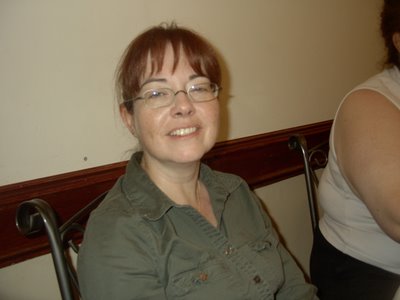
Here is Jill -- possibly the only woman on the planet mentally equipped (i.e. patient enough) to cope with me.
The service was typical for New World, but my sense was that prices had gone up.
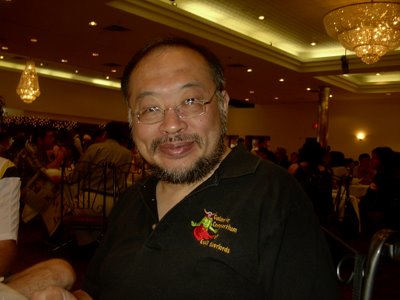
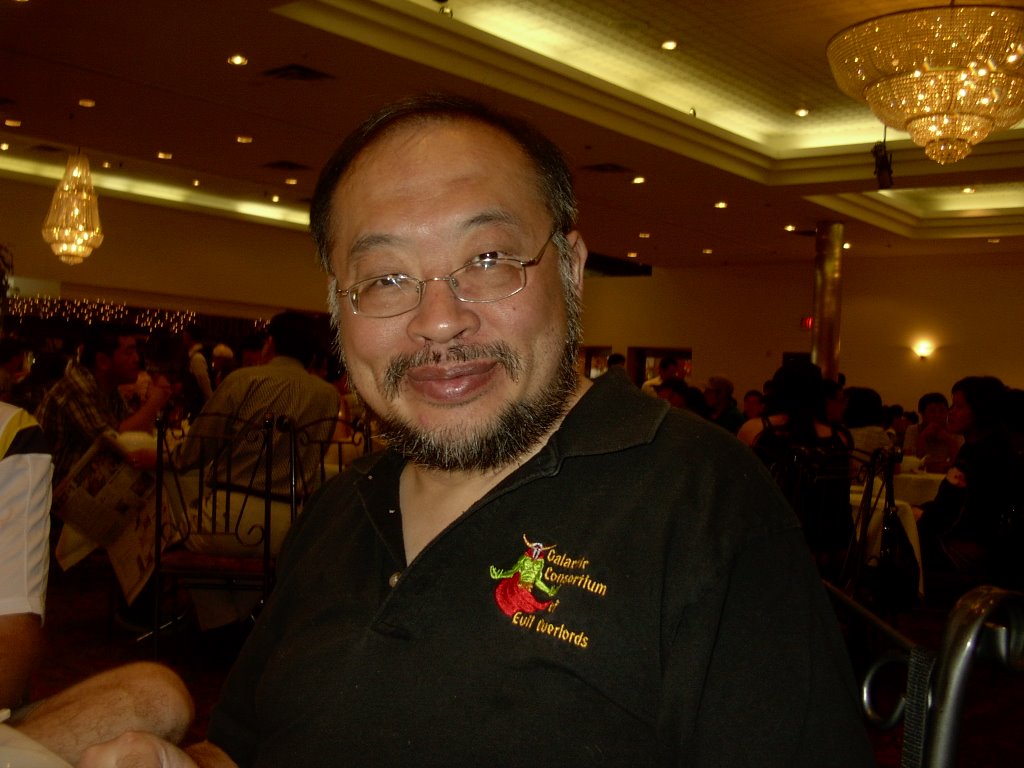
Here is me -- fat, balding, middle-aged, grumpy, not-enough-sleep computer-geek dude. Very happy that another successful Mid year Barbecue is over.
This year, fortunately, there were no stomach bug episodes for anyone.
The Mid Year Barbecue ended around midnight on Saturday. Bob and I traded children -- Brie went for a sleepover with Lisa at the hotel where Lisa and Bob were staying. In exchange, we acquired Robert, who wanted some up-close in-depth hands-on with Quake 4. And of course, we were just the guys to let him do that.
Robert admits to crashing some time around 3am.
Next morning, Jill, Corwin, and I were up by 9:30. Shortly after that, Robert, confronted with Corwin's morning cheerfulness, got up in self-defence. Then Bob called to say that the girls were going for a swim, and they would all eventually get here.
There was time for some barbecue cleanup, virtually all of which Jill did, because I was zoned out. We collected our neighbour Pam shortly after 11, when Bob, Lisa, and Brie descended upon us. After limited debate, we made off for the place formerly known as New World for dim sum.

According to the menu, what was once New World is now Empire Oriental Cuisine, but this is subject to my faulty memory. Might have to go back to verify all this. The food and decor is much the same.
In the first photo, you see Robert and Corwin looking much too happy.
We had an ideal spot -- right beside the kitchen, so all the dim sum carts had to pass us.
Here are Lisa and Bob. What, does everyone except me present such a great appearance after so little sleep??

The food was about like New World's usual standard -- not exceptional, but by no means bad.
Here are Lisa and Brie. Lisa is understandably suspicious of my good intentions.
Both Brie and Pam like shrimp -- which was good, because many dishes contained shrimp.
Here is Jill -- possibly the only woman on the planet mentally equipped (i.e. patient enough) to cope with me.
The service was typical for New World, but my sense was that prices had gone up.
Here is me -- fat, balding, middle-aged, grumpy, not-enough-sleep computer-geek dude. Very happy that another successful Mid year Barbecue is over.
Kid Activities
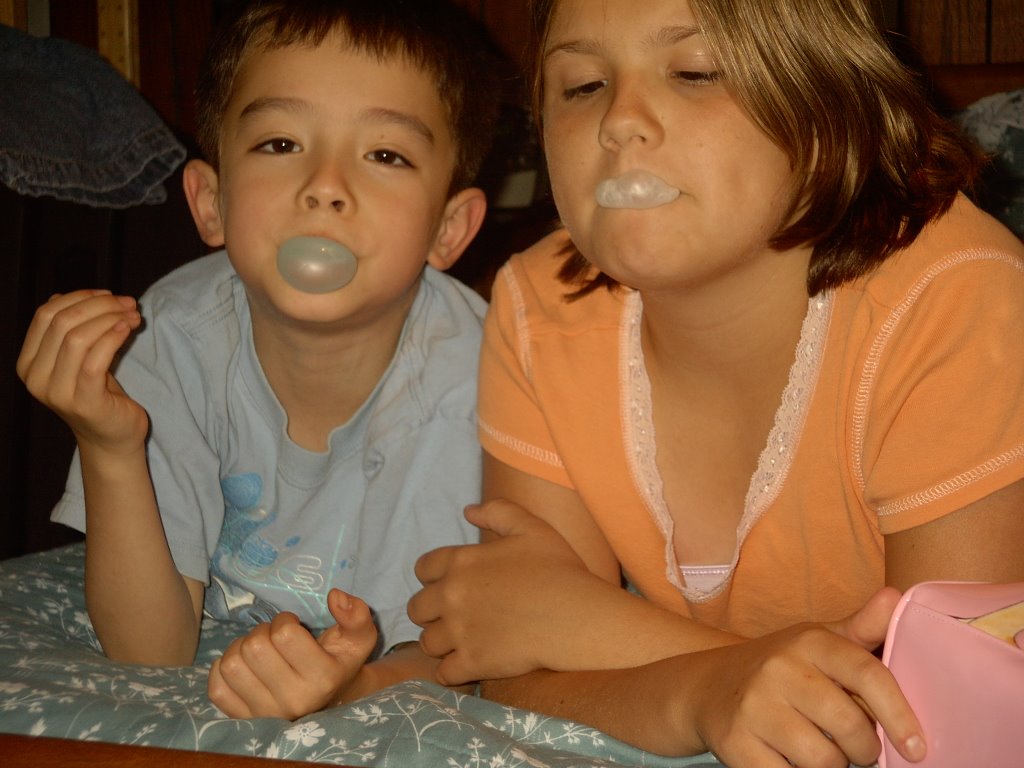
I have long believed that the perfect family size consists of four people -- two parents and two kids, ideally a boy and a girl. For the next little while, our family has expanded to include Brie and has become the perfect size. It's nice to have her around. Certainly, Corwin thinks so!


Link

Link
Sunday, June 25, 2006
The Tenth Mid Year Barbecue 2006
Brie arrived just in time on Thursday to be put to work to help in the preparations for the 2006 Mid year Barbecue.
I honestly can't remember how many years we have had this event. In 1999, we skipped a year -- we had Corwin's first month banquent instead. But generally, we have held this barbecue on the last Saturday in June, and we've done it since shortly after we moved in to the house. So I am guessing that we would have started in 1996. If so, this was the tenth. (And if we had done one in 1999, this would have been the eleventh.)
On Thursday, with Brie to help with Corwin-wrangling, we got the sausages and the main course -- forty pieces of pork tenderloin. Mid Year Barbecue prep had been underway since Wednesday, when Jill and Peter did a massive round of yard work.
Friday morning, I made the char siu marinade, unwrapped the tenderloin, and repackaged them in ziplock bags to marinate overnight.
The char siu marinade recipe for this year (it tends to vary a bit) was as follows:
in a large non-stick pot on low head, I added
8 squirts of ketchup
8 glugs of teriyaki sauce
8 bottles of char siu sauce
1 bottle of hoisin sauce
16 shakes of white pepper
24 shakes of garlic powder
This mixture was allowed to warm up as it was slowly stirred. One of the eight empty char siu bottles was refilled with the heated mixture and allowed to cool.
The meat was prepared by first rinsing in cold water. With one scoop of marinade in the bottom of a ziplock bag, five tenderloins were added to the bag. On top, a light sprinkling of salt, four shakes of white pepper, and a glug of cider vinegar. Then a second scoop of char siu marinade. The bag was then sealed, and squished around to get the meat coated with the marinade.
In the preparation process, no raw meat was ever allowed to touch the supply of amrinade in the pot. Leftover marinade in the pot was set aside for use as sauce.
The bags of meat were left in the fridge overnight.
Friday afternoon, I went on a road trip with Brie, and got more supplies. On our way home, we picked up Corwin from school at the end of his last day of Grade One.
On Saturday morning, I refilled the propane tanks. This year, I had a tank which had gone past its ten year limit. The guy at the service station offered to fill the tank anyway -- something which has to make you nervous about what people actually do with old tanks.
Michael and Lorna dropped by in the early afternoon, and we did the beer, ice, and fruit run. After unloading, there was enough time to relax and hang out. Around 2:00pm, the Phinneys arrived -- sadly, without Elaine, who had a camping weekend with her colleagues on the same weekend. With Bob, I did the chicken wing run -- 200 medium wings from the St. Louis Bar and Grill -- and the Mid Year Barbecue was in full swing.
Starting around 3:00, other people began to arrive.

Around 4:30 or 5:00, after the chicken wings and the sausages, the tenderloins were hauled out and thrown on the barbecue to cook on low heat. The bottle of char siu mix set aside at the beginning was used to brush on the meat (actaully spooned on and rubbed in with a spoon because of the viscosity of the sauce).
I wasn't as happy with the meat this year as I was last year, because I felt that the heat had been overdone. However, no one seemed to mind.
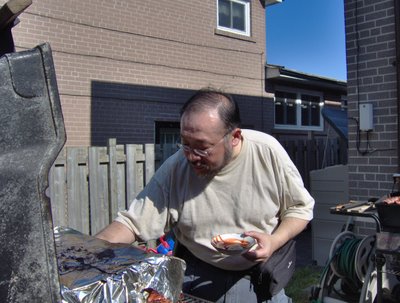
So, another successful Mid Year Barbecue goes down in history.
There were 60 people this year, and the event ran from about noon to midnight. And for the record, I seriously overestimated the amount of meat needed. Again.
I honestly can't remember how many years we have had this event. In 1999, we skipped a year -- we had Corwin's first month banquent instead. But generally, we have held this barbecue on the last Saturday in June, and we've done it since shortly after we moved in to the house. So I am guessing that we would have started in 1996. If so, this was the tenth. (And if we had done one in 1999, this would have been the eleventh.)
On Thursday, with Brie to help with Corwin-wrangling, we got the sausages and the main course -- forty pieces of pork tenderloin. Mid Year Barbecue prep had been underway since Wednesday, when Jill and Peter did a massive round of yard work.
Friday morning, I made the char siu marinade, unwrapped the tenderloin, and repackaged them in ziplock bags to marinate overnight.
The char siu marinade recipe for this year (it tends to vary a bit) was as follows:
in a large non-stick pot on low head, I added
8 squirts of ketchup
8 glugs of teriyaki sauce
8 bottles of char siu sauce
1 bottle of hoisin sauce
16 shakes of white pepper
24 shakes of garlic powder
This mixture was allowed to warm up as it was slowly stirred. One of the eight empty char siu bottles was refilled with the heated mixture and allowed to cool.
The meat was prepared by first rinsing in cold water. With one scoop of marinade in the bottom of a ziplock bag, five tenderloins were added to the bag. On top, a light sprinkling of salt, four shakes of white pepper, and a glug of cider vinegar. Then a second scoop of char siu marinade. The bag was then sealed, and squished around to get the meat coated with the marinade.
In the preparation process, no raw meat was ever allowed to touch the supply of amrinade in the pot. Leftover marinade in the pot was set aside for use as sauce.
The bags of meat were left in the fridge overnight.
Friday afternoon, I went on a road trip with Brie, and got more supplies. On our way home, we picked up Corwin from school at the end of his last day of Grade One.
On Saturday morning, I refilled the propane tanks. This year, I had a tank which had gone past its ten year limit. The guy at the service station offered to fill the tank anyway -- something which has to make you nervous about what people actually do with old tanks.
Michael and Lorna dropped by in the early afternoon, and we did the beer, ice, and fruit run. After unloading, there was enough time to relax and hang out. Around 2:00pm, the Phinneys arrived -- sadly, without Elaine, who had a camping weekend with her colleagues on the same weekend. With Bob, I did the chicken wing run -- 200 medium wings from the St. Louis Bar and Grill -- and the Mid Year Barbecue was in full swing.
Starting around 3:00, other people began to arrive.

Around 4:30 or 5:00, after the chicken wings and the sausages, the tenderloins were hauled out and thrown on the barbecue to cook on low heat. The bottle of char siu mix set aside at the beginning was used to brush on the meat (actaully spooned on and rubbed in with a spoon because of the viscosity of the sauce).
I wasn't as happy with the meat this year as I was last year, because I felt that the heat had been overdone. However, no one seemed to mind.

So, another successful Mid Year Barbecue goes down in history.
There were 60 people this year, and the event ran from about noon to midnight. And for the record, I seriously overestimated the amount of meat needed. Again.
Brianne arrives!
My goddaughter Brianne arrived from Tennessee on Thursday afternoon. I took the afternoon off, picked her up from the airport, took her to lunch at that most Canadian of establishments, Tim Horton's, and got her back to the house by mid afternoon. There was enough time for a brief visit (and for Brie to begin unpacking) before we went off to get Corwin from his second last day of school.
Shortly thereafter, on Thursday afternoon and evening, there was much romping in the back yard.
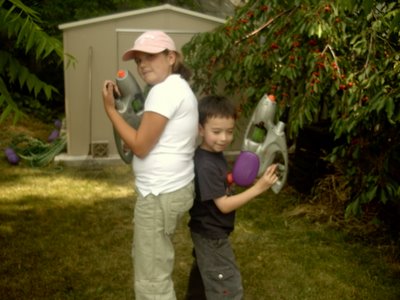
Bri has been visiting since Corwin was four years old. To say that they both enjoy these visits is probably not overstating the case.
Shortly thereafter, on Thursday afternoon and evening, there was much romping in the back yard.

Bri has been visiting since Corwin was four years old. To say that they both enjoy these visits is probably not overstating the case.
Monday, June 19, 2006
Gemini, Spitzer, Space Dust, a Flat Tire, and a Voice from the Past
On Saturday morning, I discovered that I had a flat tire, brought about by too agressively snugging the Volks against the stone wall beside our driveway. I've backed the car in successfully, hundreds of times, but this time, I misjudged and scraped the front passenger side tire, bashing the valve and causing the tire to go flat.
After a morning spent at the office (using the other car to get there) I went home and faced up to my problem. The valve was badly crunched, but there appeared to be no other damage. With Jill's air pump, we got the tire inflated again. It leaked, but looked like it might last until I got over to Canadian Tire (fortunately not a long drive).
However, it was clearly not my morning -- I shortly realized that I had forgotten my money and credit cards in my pouch, left hanging on the door. Fortunately, I had my cell phone, and a quick call later, Jill came to the rescue. In the meantime, I had pulled into the parking lot of my son's school. A few minutes to get the tire pressure back up, and shortly after that, Jill arrived. We even figured out that bending the valve stem and stuffing in a wad of plastic from a grocery bag beside it significantly reduced the leakage.
Once again, I set out. It was shortly before 1 o'clock as I pulled out of the parking lot. The radio was on, tuned as always to CBC. and Quirks and Quarks was on. Bob MacDonald was interviewing an astronomer, whose observations of interstellar dust grains using the Gemini Telescope, and the Spitzer Space Telescope, had demonstrated that some of these dust grains -- essential raw materials of planets -- would have formed in the supernovae of the earliest stars formed in the aftermath of the Big Bang.
Then I realized -- the astronomer being interviewed was Doug Welch, my classmate in university -- a very bright guy, who has obviously made it to the big leagues. It was one of the bright spots of a day which hadn't been all that great.
A PR fluff piece of Doug's research is available on the Gemini website.
I recall that it was Doug's custom to wear a cape on the day of the Spring and Fall equinoxes -- on that day, he was Captain Equinox. Somewhere in my collection of old paper photos, there is undoubtedly one of Captain Equinox, dating from the late 1970's, leaping down from the top of some campus structure.
The podcast of the June 17 Quirks and Quarks show is available from CBC radio.
I had another bit of good news a little later -- the tire was only $30 to repair, as opposed to a complete replacement.
After a morning spent at the office (using the other car to get there) I went home and faced up to my problem. The valve was badly crunched, but there appeared to be no other damage. With Jill's air pump, we got the tire inflated again. It leaked, but looked like it might last until I got over to Canadian Tire (fortunately not a long drive).
However, it was clearly not my morning -- I shortly realized that I had forgotten my money and credit cards in my pouch, left hanging on the door. Fortunately, I had my cell phone, and a quick call later, Jill came to the rescue. In the meantime, I had pulled into the parking lot of my son's school. A few minutes to get the tire pressure back up, and shortly after that, Jill arrived. We even figured out that bending the valve stem and stuffing in a wad of plastic from a grocery bag beside it significantly reduced the leakage.
Once again, I set out. It was shortly before 1 o'clock as I pulled out of the parking lot. The radio was on, tuned as always to CBC. and Quirks and Quarks was on. Bob MacDonald was interviewing an astronomer, whose observations of interstellar dust grains using the Gemini Telescope, and the Spitzer Space Telescope, had demonstrated that some of these dust grains -- essential raw materials of planets -- would have formed in the supernovae of the earliest stars formed in the aftermath of the Big Bang.
Then I realized -- the astronomer being interviewed was Doug Welch, my classmate in university -- a very bright guy, who has obviously made it to the big leagues. It was one of the bright spots of a day which hadn't been all that great.
A PR fluff piece of Doug's research is available on the Gemini website.
I recall that it was Doug's custom to wear a cape on the day of the Spring and Fall equinoxes -- on that day, he was Captain Equinox. Somewhere in my collection of old paper photos, there is undoubtedly one of Captain Equinox, dating from the late 1970's, leaping down from the top of some campus structure.
The podcast of the June 17 Quirks and Quarks show is available from CBC radio.
I had another bit of good news a little later -- the tire was only $30 to repair, as opposed to a complete replacement.
Tuesday, June 06, 2006
Cobalt
In response to Mick's comment on the first Temagami post, I looked through the photo collection for photos of the town of Cobalt. Interestingly, I have none in digital format, although there are undoubtedly some in actual photo-on-paper format. (But those are hard to search through).
The best I can offer are a couple of photos of the Highway Book Shop, which is just off Highway 11, fairly close to the exit to Cobalt.
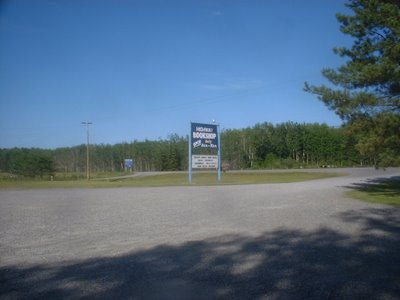
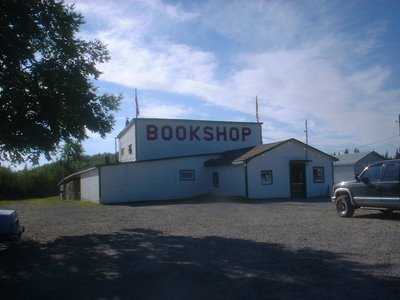
This whole region is quite lovely, and we visit whenever possible. It doesn't hurt that the Highway Book Shop is there -- a drug calling to the addict.
The best I can offer are a couple of photos of the Highway Book Shop, which is just off Highway 11, fairly close to the exit to Cobalt.
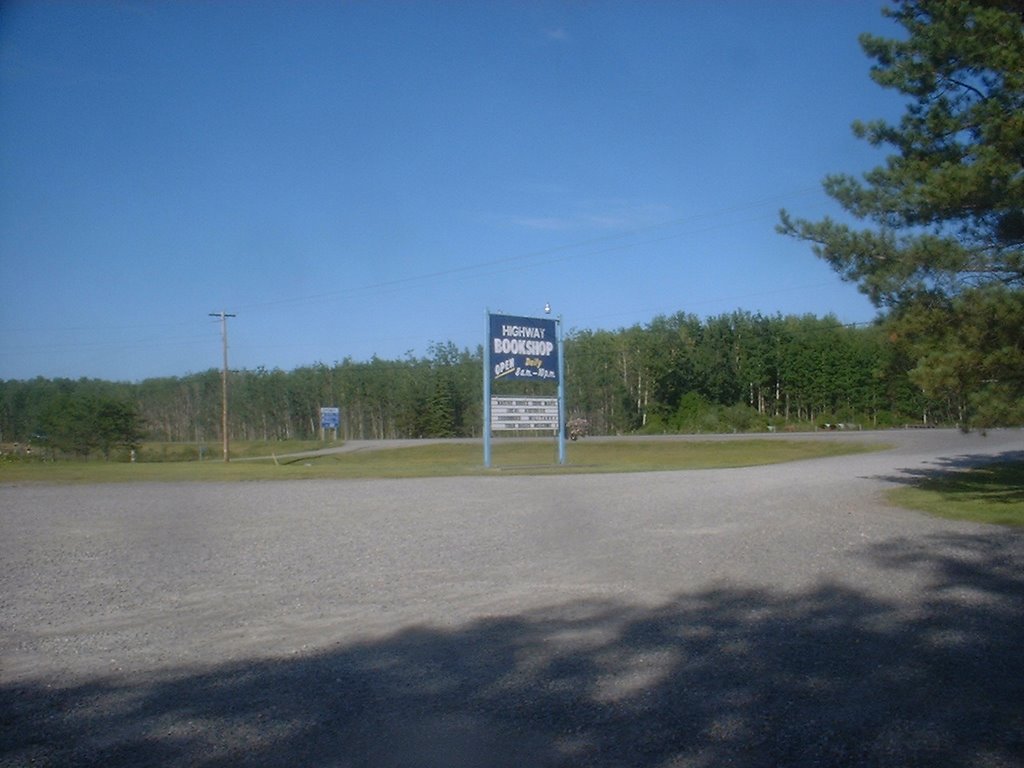
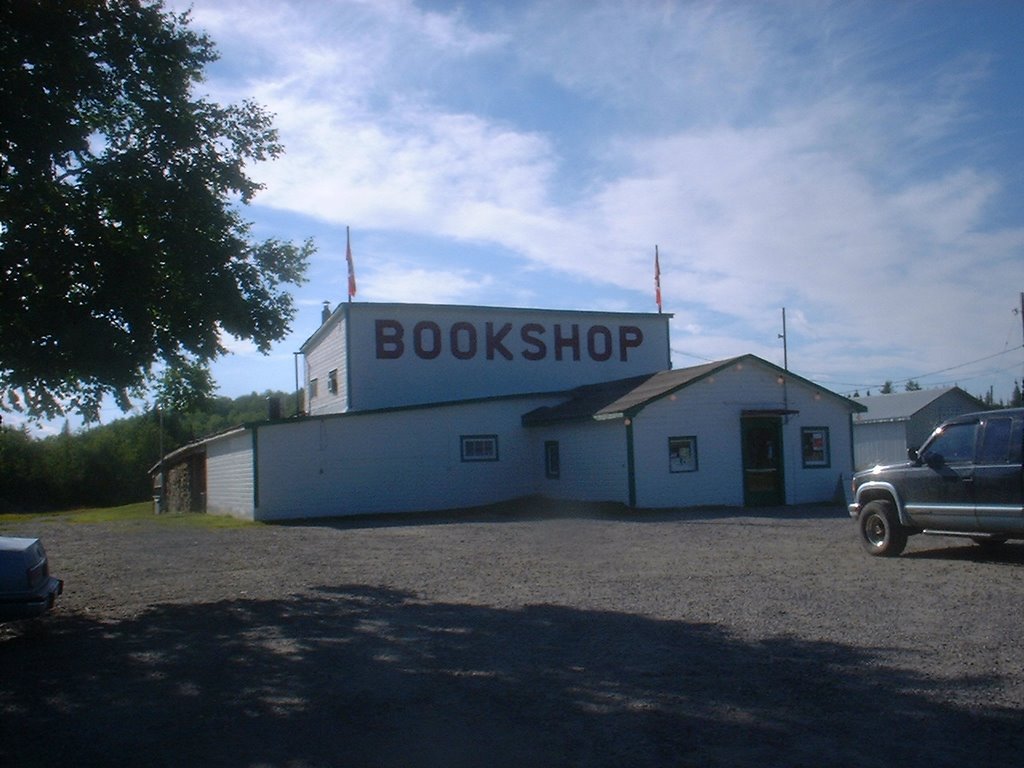
This whole region is quite lovely, and we visit whenever possible. It doesn't hurt that the Highway Book Shop is there -- a drug calling to the addict.
Thursday, May 25, 2006
Photos from Temagami - 2
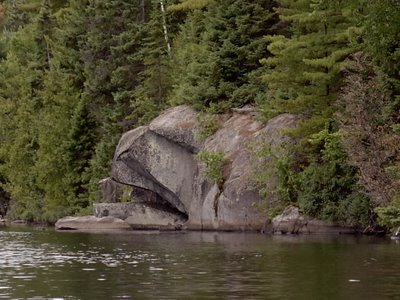
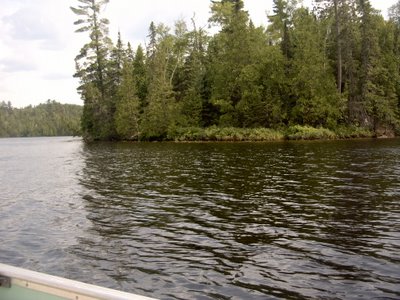
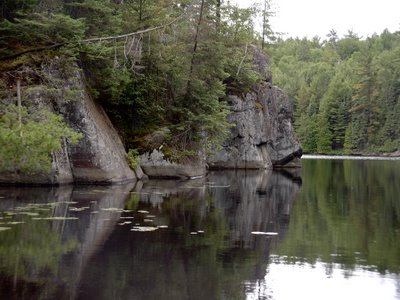
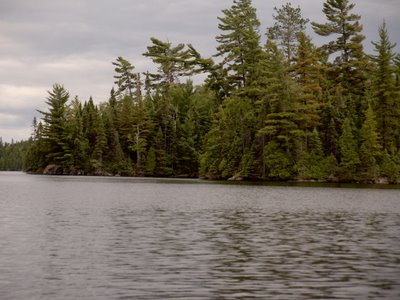
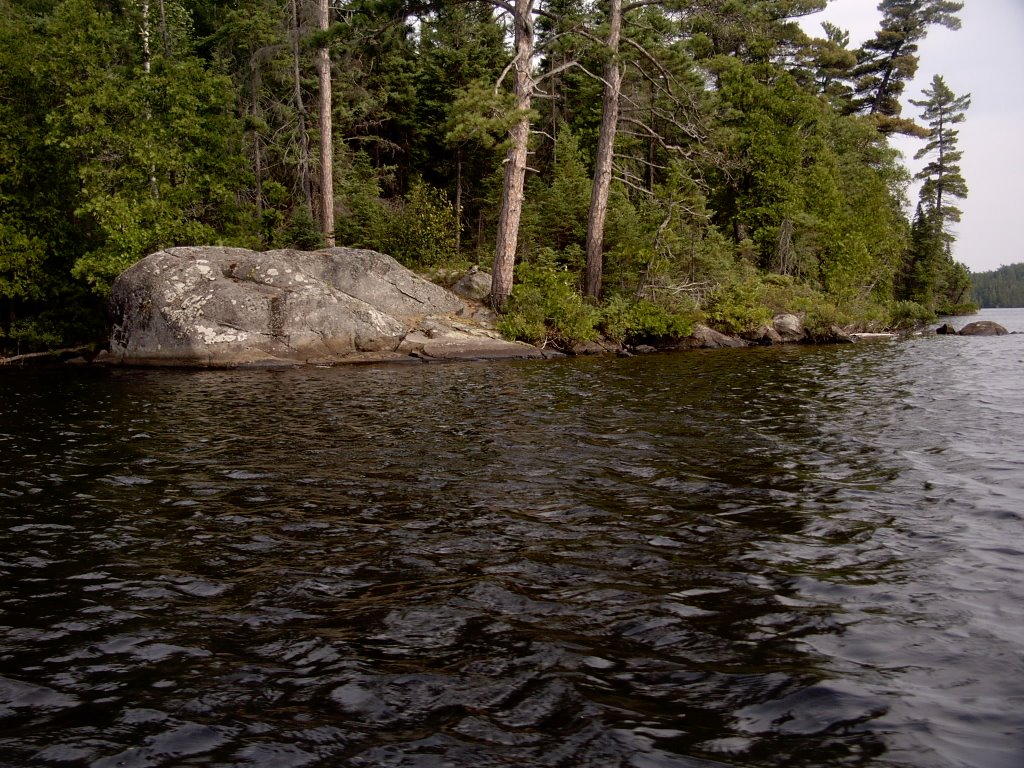
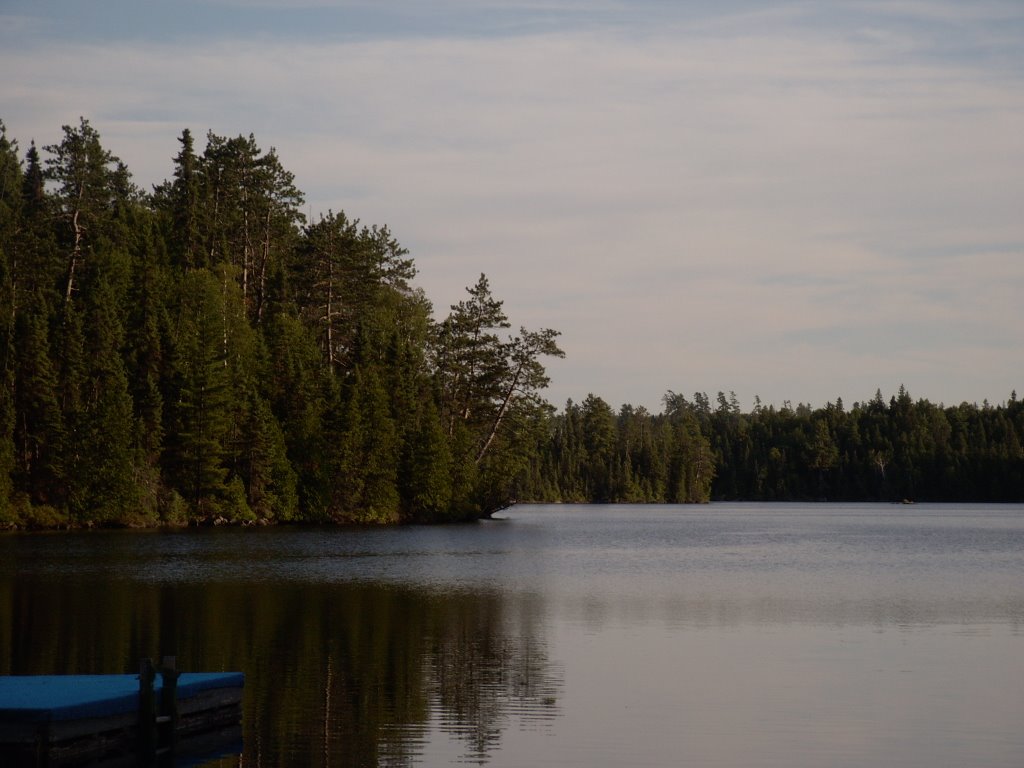
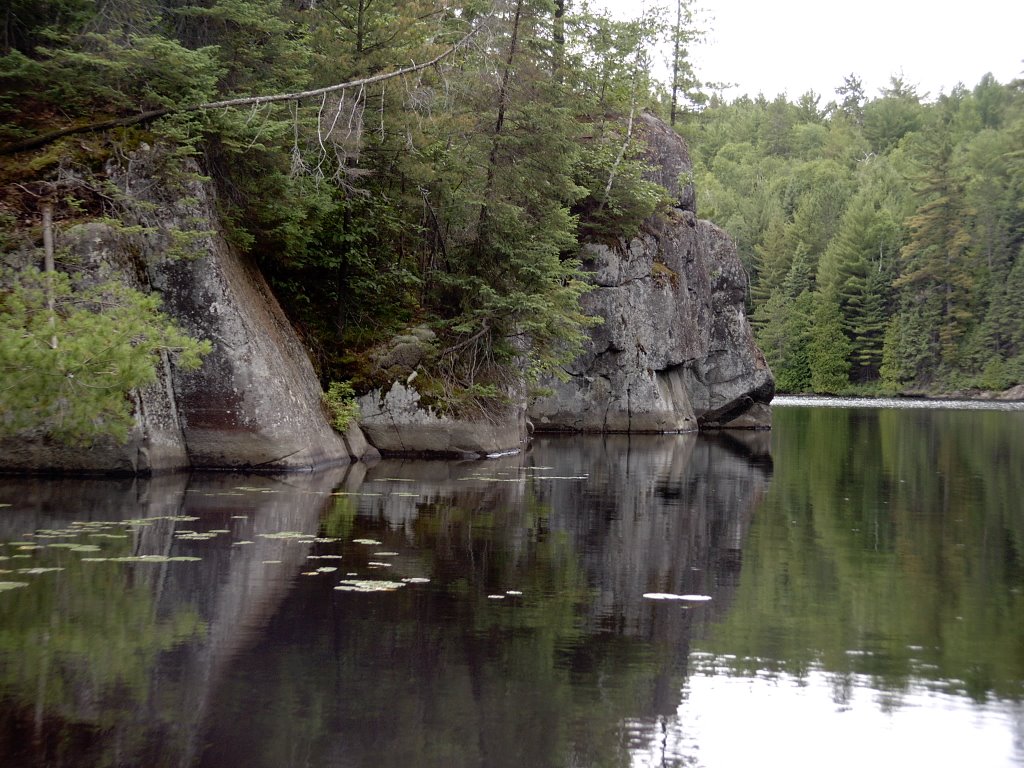
The following frames show various parts of Lake Herridge. These places are accessible by boat or canoe.
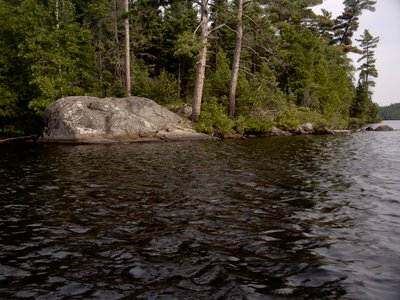
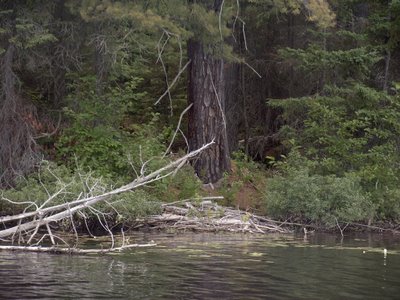
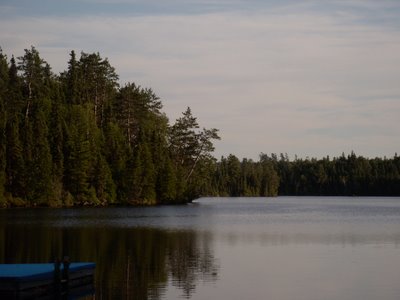
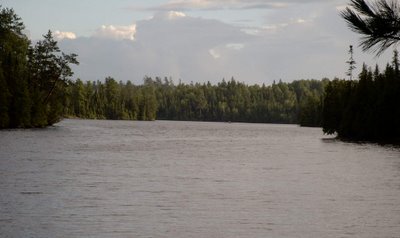





Wednesday, May 24, 2006
Photos from Temagami - 1
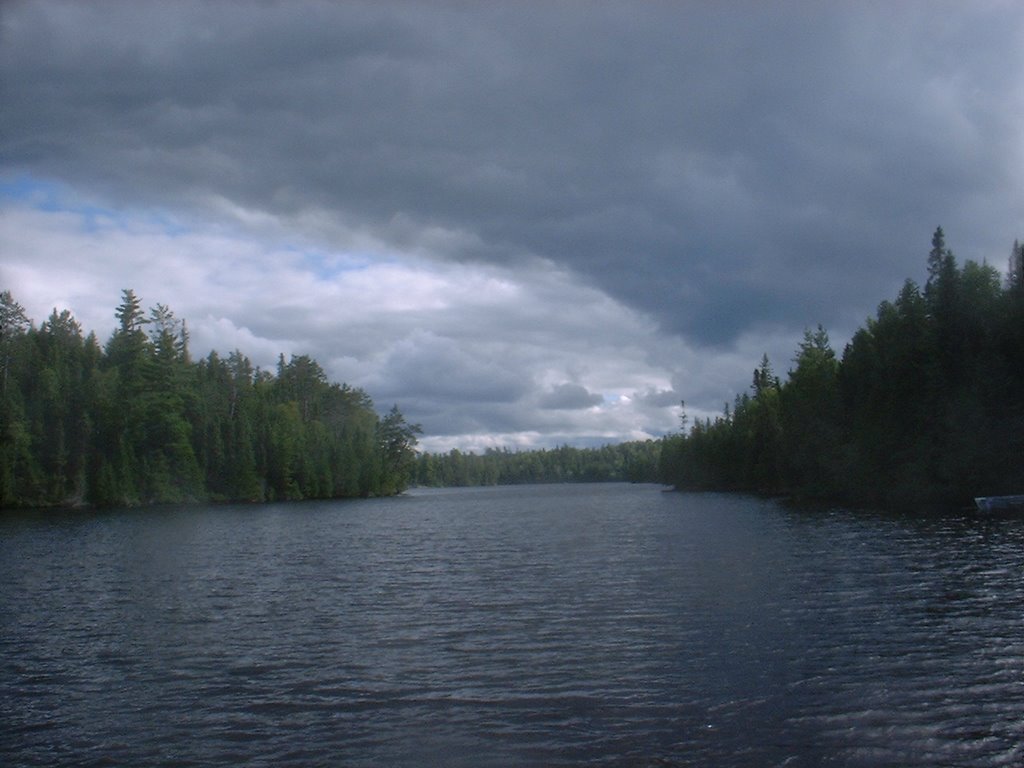
These pictures were taken at Lake Herridge in August 2003, and August 2004. The 2004 visit coincided with the week that ended with the great power blackout.
Lake Herridge is about 11 km south of Temagami, Ontario on Highway 11.
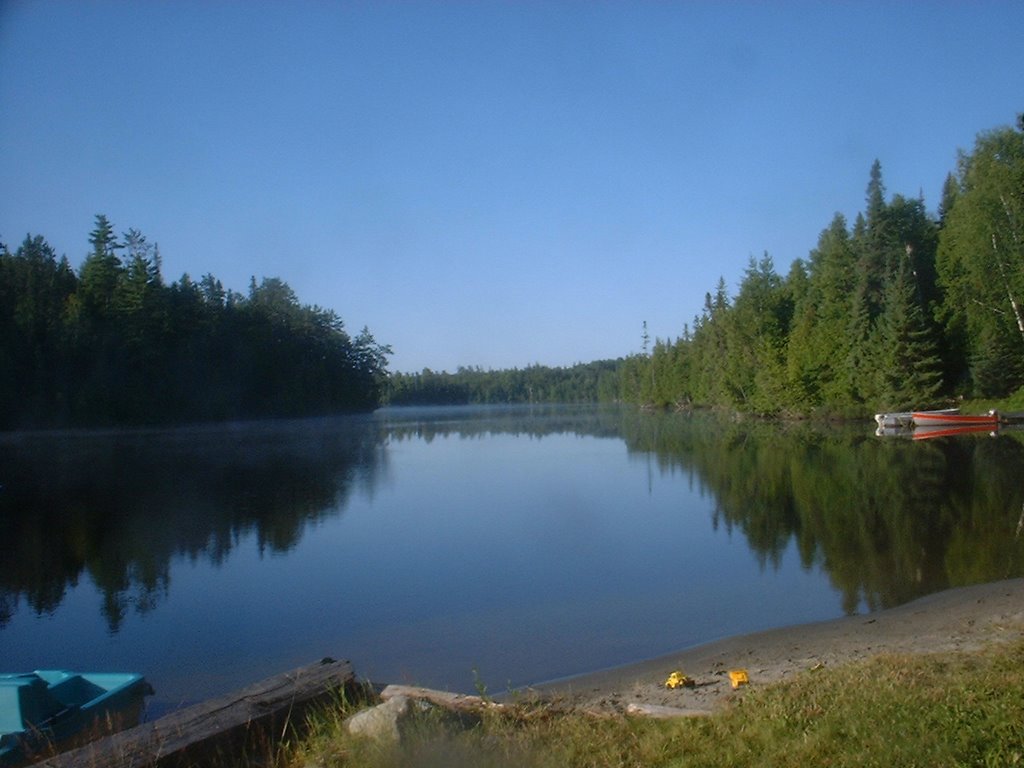
The first two photos show the view From the beach area of Lake Herridge Lodge, looking to the southwest -- on a cloudy day, and on a bright sunny day.
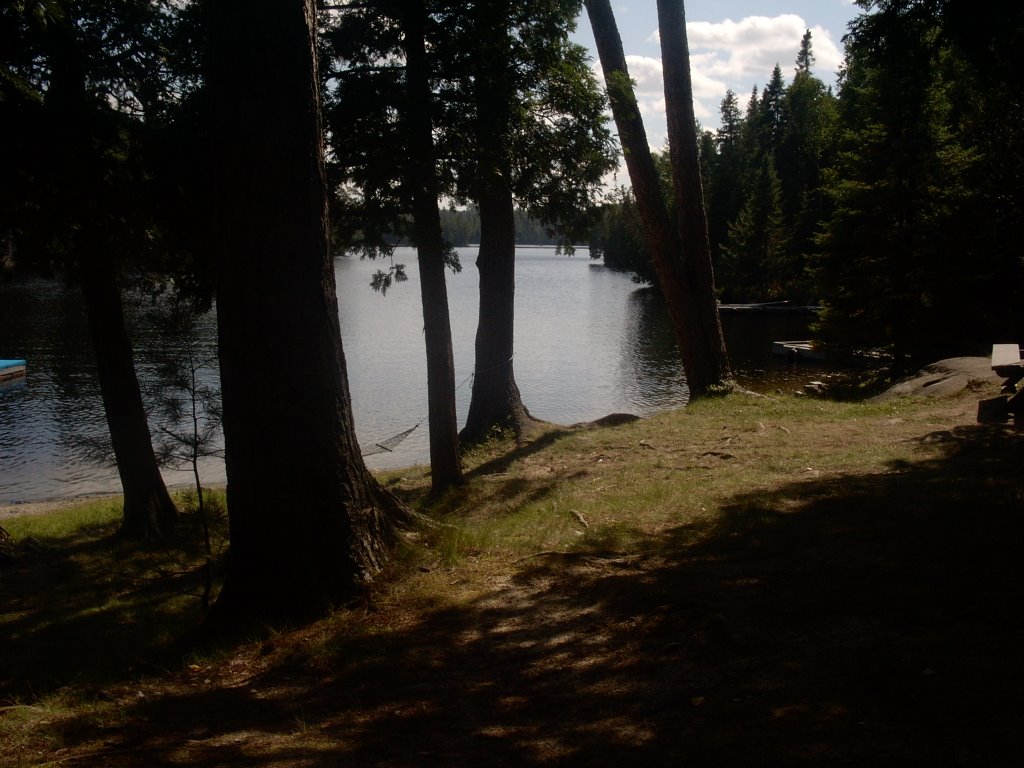
The third picture was taken from farther away from the edge of the water.
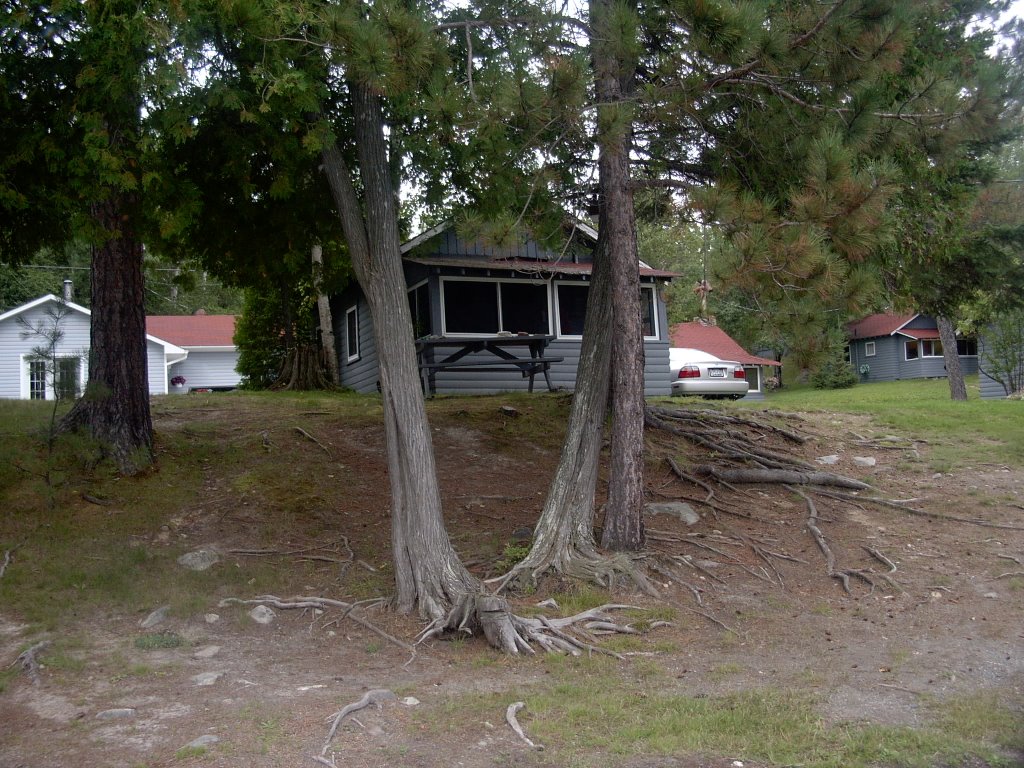
Looking back up at the cabin, you can see that the beach is at the base of a gentle slope that rises from the water's edge up to a gravel driveway, not visible beyond the cabins.
The underlying geology is shield rock. The topsoil is a fairly thin layer over top of that, so you can see the tree roots. Despite the thinness of the soil, the trees are solidly anchored.

Although not shown in these photos, there are large rock hummocks in the immediate area. The lake is just off Highway 11.
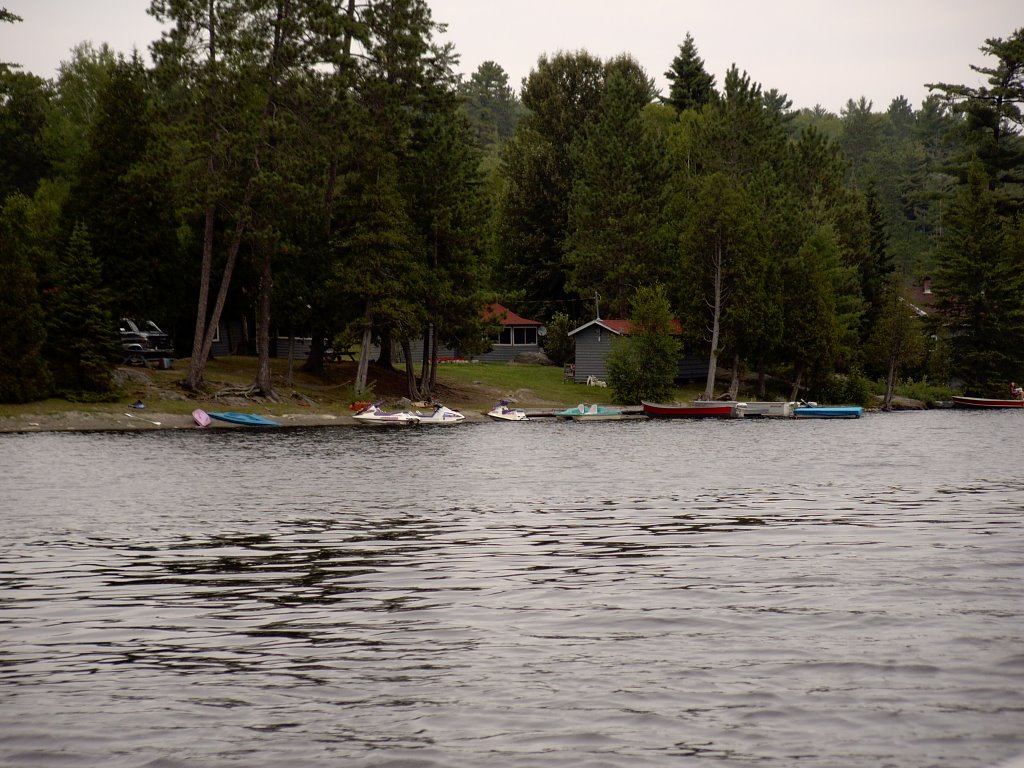
This is the view from the bay, looking up at the lodge. Approximately 20% of the lodge is visible in this view. There are portions hidden by trees in this photo, and a substantial part of the lodge is off the left edge of the photo. Toward the left in this photo is also a small hill with a recently renovated cabin at the top.

The interiors of the cabins are clean, but they are pretty basic -- this is, after all, a cabin experience. The cabins all have running water, showers, electricity. Laptops will run here :-)
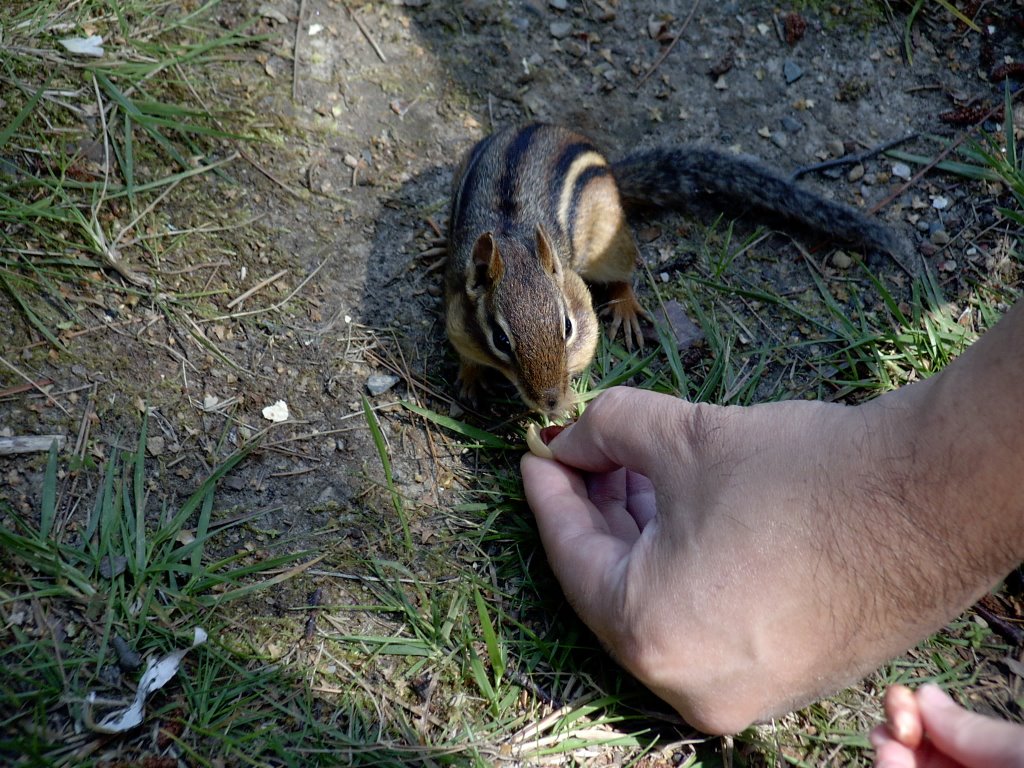
There are opportunities to interact with wildlife. The chipmunks are fearless, although the squirrels are skittish. On previous visits, whiskyjacks have been sighted. There is usually a family of loons (the winged kind) out on the lake.
Saturday, March 05, 2005
Suey Chong Lum
February 10, 1931 to February 20, 2005
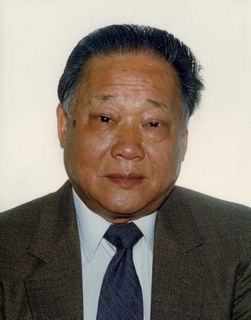
My father, Suey Chong Lum, passed away on February 20, 2005. Here is a brief story of his life, edited and corrected from the version published in the obituary section of the Alaska Highway News on March 4, 2005.
Suey Chong Lum was born in 1931, on February 10, in the last days of the Year of the Horse. He was born in China, in a small village called Wah Min Hung located about 200 miles northwest of Hong Kong. February 10, 1931 was a Monday. There is no family record, but it was probably warm and cloudy that day, because it is always warm and cloudy in that part of the world. If there had been a fortune teller present, he might have seen some clouds in the baby’s life as well as in the sky.
The first of these clouds came when he was six years old. In 1937, the Japanese invaded China. His father, Lum Yoey Nien, was one of the many Chinese soldiers who never returned from the war.
Suey Chong and his mother, Chow Yuk Chun, went through hard times. Education was limited. Food was sometimes non-existent. As a teenager, he recognized that with no land, the prospects for farming were not good. One night while sleeping, he had a dream – and in his dream, he had a son. When he awoke, he clearly remembered the dream, but he also understood the reality that he could not stay in the village – with no land and no work, he would never be able to support a wife and a family.
Suey Chong was given the chance to go to Canada to work for his grandfather, Lum Goey Hien. In February of 1950, he left the family home village. After a brief sojourn in Hong Kong, he found himself on a steamship in July of 1950. He got off the boat in Oakland, California in early August and made his way north by bus. His immigration papers list White Rock, B.C. as his entry point into Canada in August of 1950.
After being stalled in Vancouver for a few weeks due to a transportation strike, he finally joined his grandfather in Prince George, in the northern interior of B.C. by mid September. It was here that Suey Chong began his career in the family dry cleaning business.
For a brief time in the mid 1950s, he made his way to Toronto, where he worked at Lichee Garden – even then, a famous Chinese restaurant, which was owned by the branch of the Lum family descended from his grandfather's elder brother. He earned $15 a week at Lichee Garden, and decided after some months that there were better ways to earn a living. He went back to the dry cleaning business.
In 1955, he had his first encounter with Canadian medicine. He went into the hospital in Vancouver to have his tonsils removed, and had a bad reaction to the anesthetic. As a result, they kept him in the hospital overnight. Forty nine years later, he was still able to recall the details of his conversation with the old Chinese gentleman who shared his hospital room.
By this point, the family dry cleaning business had moved even further north – to Fort St. John, on the Alaska Highway.
Two years later, Suey Chong was joined by Bik Sim – the beautiful girl from the next village who was his fiancée. They were married on Christmas Eve, 1957 in the Anglican church in Fort St. John.
In October, 1958, Suey Chong and Bik Sim had a son. A decade earlier, Suey Chong had awoken from a dream, and from details in that remembered dream, he named his eldest son.
The family dry cleaning business took much time – ten to fourteen hours a day. But despite this, they had a daughter – Betty Yet Tain -- a few years later in 1961. It was also during this period that Suey Chong developed a taste for Godzilla movies. Suey Chong and Bik Sim also developed a close friendship with another Chinese immigrant couple – Lang Mark and his wife, Hing.
Early in 1963, the family paradigm shifted radically. Suey Chong’s grandfather decided to liquidate his assets and retire to Hong Kong. Suey Chong learned that the family dry cleaning business did not include a provision for him to do a buyout. Suey Chong, his wife, and their two children, watched as his grandfather walked out the door in the spring of 1963. They never saw him again.
Bik Sim was pregnant with a third child. Very soon after his grandfather was gone, Suey Chong and his family left the building for its new owners. The family moved to Dawson Creek and lived there briefly, and then moved on to Fort Nelson. Finding work was a priority.
Three hundred miles up the Alaska Highway, Fort Nelson was a major town on the highway that provided infrastructure and services for the companies that developed the natural resources of the surrounding region. It was here that the Lum family moved from dry cleaning into the restaurant business.
With limited education and training, and limited understanding of English, the Lums found the available work was also limited. The restaurant business was one place where it was possible to make a living.
Early on, Suey Chong did a market competition analysis by walking in and eating a meal in a competing establishment. He came out understanding that based on just the quality of the food, the competition could be beaten. However, there were other factors. Ingenuity and hard work were essential.
Suey Chong and Bik Sim learned from their business partners and co-workers. This was on the job training at its most intense. With no knowledge of Canadian food, they effectively figured out by reverse engineering how to produce the standard meals in a Canadian restaurant, and then expanded that repertoire to include Chinese dishes as well.
In September of 1963, a third child, a son -- Ken Do Chuan (pronounced “Kuen”) -- was born.
Suey Chong worked in several businesses in Fort Nelson, including a brief stint as a janitor for the local school district.
In 1967, Canada’s Centennial Year, the family moved to a small community on the Alaska Highway located around milepost One Hundred and One. The community’s name – Blueberry – was never used. All the residents referred to their home as “Wonowon” – a name based on its location on the Alaska Highway. In Wonowon, Dave and Hattie Close owned the Wonowon Services organization – a general store, service station, motel, and restaurant. They needed someone to run the restaurant, and came to an agreement with Suey Chong to do it, starting on September 15, 1967.
It was in Wonowon that Suey Chong applied all that he had learned about the restaurant business to make the restaurant a roaring success. The restaurant opened at 6am, and closed at 11pm. The hours were a bit shorter on Sunday. It was a service business, and there was no such thing as time off. However, it was a tourist stop, and a bus stop. It was used by oil field crews and truckers. It was the preferred afternoon coffee spot for the town.
In later years, Suey Chong would reminisce about the worry he felt in those first few months. – trying to do everything perfectly so that there would be no complaints. Trying to keep up with the demands of the business.
On the first Christmas Eve in Wonowon, Suey Chong and Bik Sim started a tradition. It was their anniversary, and they closed the restaurant early, and spent spent the afternoon cooking. In the evening, they invited the people of Wonowon – their friends and customers – to a Christmas feast, with a distinctly Chinese style. The last of these was held in 1971 – over thirty years later, these gatherings are still remembered by the attendees.
By the late 1960s, Suey Chong had brought his mother to Canada. It was at this time that he began the immigration process to bring Bik Sim’s parents and brothers to Canada. This was completed in 1970 and 1971.
In August of 1972, close to the 22nd anniversary of Suey Chong’s arrival in Canada, the family made the biggest move in its history – leaving Wonowon and moving to Toronto.
In Toronto, for the first time in many years, Bik Sim was reunited with her parents and brothers – the result of Suey Chong’s tireless work with Canadian Immigration.
Suey Chong bought a house in down town Toronto in December of 1972. He owned businesses and had jobs in Toronto over the next three decades. He lived a quiet and modest life with his wife and his children. He defied convention by having a vegetable garden instead of a front lawn. He enjoyed occasional visits to the track, to play the horses. At family gatherings, he was the one who chopped roast pork and roast duck, wielding a meat cleaver with consummate skill. His barbecued pork was recognized to be better than anything you could buy.
Starting in 1972, he was uncle to six nieces and two nephews in the families of Bik Sim’s two brothers. His mother passed away in 1982. His eldest son, and then his daughter, were married in the early 1990s. Frequent family gatherings expanded to include his son-in-law, Barry Quan, and daughter-in-law, Jill Snider Lum.
After nearly 49 years, he returned to the family home village in China in 1998. It was the first time that he had returned in nearly half a century. On that same trip, he stood at the podium in the Great Hall of the People in Beijing, walked along the Emperor’s walkway in the Forbidden City, and looked northward toward mist covered mountains while standing on the Great Wall of China.
His first grandchild, Raymond Lai Mon Quan, was born late in 1998. Five months later Corwin Wan Ning Lum was born, the fourth in a lineage of Lum eldest sons. Suey Chong took great joy in both his grandsons. His love was expressed in hugs, in hours of play, in toys and gifts, and in illicitly provided candy treats.
Shortly after Raymond was born, Suey Chong gave up smoking. He had been smoking since he was a teenager in China, where instead of cigarettes, they used loose tobacco and a water pipe. After giving up smoking, his coughing became much reduced. His health seemed to be good.
In August 2000, Suey Chong’s eldest son visited Fort St. John and Wonowon, still thought of by the Lum family as “home” after all these years. He returned to Toronto to report that the dry cleaning building was long gone -- in its place was the parking lot of a Boston Pizza restaurant.
The Year of the Horse returned in 2003 for the sixth time in Suey Chong’s life after the year of his birth. In March, Suey Chong had his second encounter with the Canadian medical system. This time, he was diagnosed with small cell lung cancer – a legacy of his years of smoking. After an aggressive treatment regimen that included chemotherapy and radiation, the lung cancer was brought under control. However, it had already spread to his brain, although this was not discovered until September of 2003.
Although contained by chemo drugs and constrained by radiation, the tumour growth was inexorable. In late March of 2004 – a year after the initial lung cancer diagnosis – stroke-like symptoms appeared. By April, it was confirmed that there was a golf-ball sized tumour mass in his brain.
The presence of the cancer dictated brain surgery. The evening before his scheduled surgery in May 2004, several rules were relaxed to allow Suey Chong to play living room soccer with his grandson Corwin. The result of the competition was indeterminate, as victory was claimed by both sides.
The surgery brought some respite. Returning home from the hospital in days, Suey Chong had a quiet summer – gardening, walking, playing with his grandsons. But by September, he was unable to stand and there were indications that additional tumour masses were continuing to grow in his brain.
Suey Chong became bedridden and was hospitalized – first at Princess Margaret Hospital, then St. Michael’s, and finally Bridgepoint.
At both Princess Margaret and St. Michael’s, he confounded all expectations as to how rapidly his remaining health would decline. However, this was a battle which could only be delayed and not won. In the months that he was hospitalized, Bik Sim was with him each day through the day. He joked with staff and attendants. He continued a dialogue with his eldest son and daughter-in-law. He played with his grandchildren. He shared snacks with his daughter and son-in-law. He gave advice to his youngest son. He was aware and alert to the end.
His physical decline accelerated after he was moved to Bridgepoint from St. Michael's at the beginning of February, 2005. Although he was still lucid as late as Friday, February 18, his capacity to respond became progressively more limited over the next day. Sometime on Saturday evening, he entered a sleep-like coma which ended with his passing at approximately 7:55pm EST on Sunday evening, February 20.
Suey Chong Lum was a modest man, who never thought of himself as well educated, and whose great regret was that he never had the opportunity for more formal learning. We, the family and friends who knew him and love him, understand as he perhaps did not, that his life represents triumph over adversity. Despite the clouds in his early life, he found a place in the sun. His courage, initiative, humour, generosity, and his ability to learn from mistakes and experience – his own as well as those of others around him – more than made up for any shortfalls due to the accident of personal circumstances.
In the last months of his life, lying in his hospital bed, Suey Chong often spoke of happier, simpler times. One of his last wishes was that he wanted to say “Thank You” to his friends and acquaintances in Northern BC. So, from Suey Chong Lum -- thank you -- for your friendship, your help, and your gift of acceptance that allowed a man from a far country to make a good life here for himself and his family.
By Do-Ming Lum [do.ming.lum@gmail.com]
Eldest son of Suey Chong Lum
Permananent Link
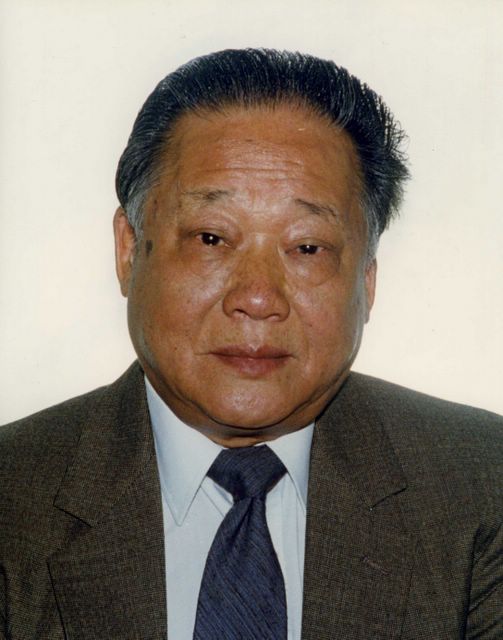
My father, Suey Chong Lum, passed away on February 20, 2005. Here is a brief story of his life, edited and corrected from the version published in the obituary section of the Alaska Highway News on March 4, 2005.
Suey Chong Lum was born in 1931, on February 10, in the last days of the Year of the Horse. He was born in China, in a small village called Wah Min Hung located about 200 miles northwest of Hong Kong. February 10, 1931 was a Monday. There is no family record, but it was probably warm and cloudy that day, because it is always warm and cloudy in that part of the world. If there had been a fortune teller present, he might have seen some clouds in the baby’s life as well as in the sky.
The first of these clouds came when he was six years old. In 1937, the Japanese invaded China. His father, Lum Yoey Nien, was one of the many Chinese soldiers who never returned from the war.
Suey Chong and his mother, Chow Yuk Chun, went through hard times. Education was limited. Food was sometimes non-existent. As a teenager, he recognized that with no land, the prospects for farming were not good. One night while sleeping, he had a dream – and in his dream, he had a son. When he awoke, he clearly remembered the dream, but he also understood the reality that he could not stay in the village – with no land and no work, he would never be able to support a wife and a family.
Suey Chong was given the chance to go to Canada to work for his grandfather, Lum Goey Hien. In February of 1950, he left the family home village. After a brief sojourn in Hong Kong, he found himself on a steamship in July of 1950. He got off the boat in Oakland, California in early August and made his way north by bus. His immigration papers list White Rock, B.C. as his entry point into Canada in August of 1950.
After being stalled in Vancouver for a few weeks due to a transportation strike, he finally joined his grandfather in Prince George, in the northern interior of B.C. by mid September. It was here that Suey Chong began his career in the family dry cleaning business.
For a brief time in the mid 1950s, he made his way to Toronto, where he worked at Lichee Garden – even then, a famous Chinese restaurant, which was owned by the branch of the Lum family descended from his grandfather's elder brother. He earned $15 a week at Lichee Garden, and decided after some months that there were better ways to earn a living. He went back to the dry cleaning business.
In 1955, he had his first encounter with Canadian medicine. He went into the hospital in Vancouver to have his tonsils removed, and had a bad reaction to the anesthetic. As a result, they kept him in the hospital overnight. Forty nine years later, he was still able to recall the details of his conversation with the old Chinese gentleman who shared his hospital room.
By this point, the family dry cleaning business had moved even further north – to Fort St. John, on the Alaska Highway.
Two years later, Suey Chong was joined by Bik Sim – the beautiful girl from the next village who was his fiancée. They were married on Christmas Eve, 1957 in the Anglican church in Fort St. John.
In October, 1958, Suey Chong and Bik Sim had a son. A decade earlier, Suey Chong had awoken from a dream, and from details in that remembered dream, he named his eldest son.
The family dry cleaning business took much time – ten to fourteen hours a day. But despite this, they had a daughter – Betty Yet Tain -- a few years later in 1961. It was also during this period that Suey Chong developed a taste for Godzilla movies. Suey Chong and Bik Sim also developed a close friendship with another Chinese immigrant couple – Lang Mark and his wife, Hing.
Early in 1963, the family paradigm shifted radically. Suey Chong’s grandfather decided to liquidate his assets and retire to Hong Kong. Suey Chong learned that the family dry cleaning business did not include a provision for him to do a buyout. Suey Chong, his wife, and their two children, watched as his grandfather walked out the door in the spring of 1963. They never saw him again.
Bik Sim was pregnant with a third child. Very soon after his grandfather was gone, Suey Chong and his family left the building for its new owners. The family moved to Dawson Creek and lived there briefly, and then moved on to Fort Nelson. Finding work was a priority.
Three hundred miles up the Alaska Highway, Fort Nelson was a major town on the highway that provided infrastructure and services for the companies that developed the natural resources of the surrounding region. It was here that the Lum family moved from dry cleaning into the restaurant business.
With limited education and training, and limited understanding of English, the Lums found the available work was also limited. The restaurant business was one place where it was possible to make a living.
Early on, Suey Chong did a market competition analysis by walking in and eating a meal in a competing establishment. He came out understanding that based on just the quality of the food, the competition could be beaten. However, there were other factors. Ingenuity and hard work were essential.
Suey Chong and Bik Sim learned from their business partners and co-workers. This was on the job training at its most intense. With no knowledge of Canadian food, they effectively figured out by reverse engineering how to produce the standard meals in a Canadian restaurant, and then expanded that repertoire to include Chinese dishes as well.
In September of 1963, a third child, a son -- Ken Do Chuan (pronounced “Kuen”) -- was born.
Suey Chong worked in several businesses in Fort Nelson, including a brief stint as a janitor for the local school district.
In 1967, Canada’s Centennial Year, the family moved to a small community on the Alaska Highway located around milepost One Hundred and One. The community’s name – Blueberry – was never used. All the residents referred to their home as “Wonowon” – a name based on its location on the Alaska Highway. In Wonowon, Dave and Hattie Close owned the Wonowon Services organization – a general store, service station, motel, and restaurant. They needed someone to run the restaurant, and came to an agreement with Suey Chong to do it, starting on September 15, 1967.
It was in Wonowon that Suey Chong applied all that he had learned about the restaurant business to make the restaurant a roaring success. The restaurant opened at 6am, and closed at 11pm. The hours were a bit shorter on Sunday. It was a service business, and there was no such thing as time off. However, it was a tourist stop, and a bus stop. It was used by oil field crews and truckers. It was the preferred afternoon coffee spot for the town.
In later years, Suey Chong would reminisce about the worry he felt in those first few months. – trying to do everything perfectly so that there would be no complaints. Trying to keep up with the demands of the business.
On the first Christmas Eve in Wonowon, Suey Chong and Bik Sim started a tradition. It was their anniversary, and they closed the restaurant early, and spent spent the afternoon cooking. In the evening, they invited the people of Wonowon – their friends and customers – to a Christmas feast, with a distinctly Chinese style. The last of these was held in 1971 – over thirty years later, these gatherings are still remembered by the attendees.
By the late 1960s, Suey Chong had brought his mother to Canada. It was at this time that he began the immigration process to bring Bik Sim’s parents and brothers to Canada. This was completed in 1970 and 1971.
In August of 1972, close to the 22nd anniversary of Suey Chong’s arrival in Canada, the family made the biggest move in its history – leaving Wonowon and moving to Toronto.
In Toronto, for the first time in many years, Bik Sim was reunited with her parents and brothers – the result of Suey Chong’s tireless work with Canadian Immigration.
Suey Chong bought a house in down town Toronto in December of 1972. He owned businesses and had jobs in Toronto over the next three decades. He lived a quiet and modest life with his wife and his children. He defied convention by having a vegetable garden instead of a front lawn. He enjoyed occasional visits to the track, to play the horses. At family gatherings, he was the one who chopped roast pork and roast duck, wielding a meat cleaver with consummate skill. His barbecued pork was recognized to be better than anything you could buy.
Starting in 1972, he was uncle to six nieces and two nephews in the families of Bik Sim’s two brothers. His mother passed away in 1982. His eldest son, and then his daughter, were married in the early 1990s. Frequent family gatherings expanded to include his son-in-law, Barry Quan, and daughter-in-law, Jill Snider Lum.
After nearly 49 years, he returned to the family home village in China in 1998. It was the first time that he had returned in nearly half a century. On that same trip, he stood at the podium in the Great Hall of the People in Beijing, walked along the Emperor’s walkway in the Forbidden City, and looked northward toward mist covered mountains while standing on the Great Wall of China.
His first grandchild, Raymond Lai Mon Quan, was born late in 1998. Five months later Corwin Wan Ning Lum was born, the fourth in a lineage of Lum eldest sons. Suey Chong took great joy in both his grandsons. His love was expressed in hugs, in hours of play, in toys and gifts, and in illicitly provided candy treats.
Shortly after Raymond was born, Suey Chong gave up smoking. He had been smoking since he was a teenager in China, where instead of cigarettes, they used loose tobacco and a water pipe. After giving up smoking, his coughing became much reduced. His health seemed to be good.
In August 2000, Suey Chong’s eldest son visited Fort St. John and Wonowon, still thought of by the Lum family as “home” after all these years. He returned to Toronto to report that the dry cleaning building was long gone -- in its place was the parking lot of a Boston Pizza restaurant.
The Year of the Horse returned in 2003 for the sixth time in Suey Chong’s life after the year of his birth. In March, Suey Chong had his second encounter with the Canadian medical system. This time, he was diagnosed with small cell lung cancer – a legacy of his years of smoking. After an aggressive treatment regimen that included chemotherapy and radiation, the lung cancer was brought under control. However, it had already spread to his brain, although this was not discovered until September of 2003.
Although contained by chemo drugs and constrained by radiation, the tumour growth was inexorable. In late March of 2004 – a year after the initial lung cancer diagnosis – stroke-like symptoms appeared. By April, it was confirmed that there was a golf-ball sized tumour mass in his brain.
The presence of the cancer dictated brain surgery. The evening before his scheduled surgery in May 2004, several rules were relaxed to allow Suey Chong to play living room soccer with his grandson Corwin. The result of the competition was indeterminate, as victory was claimed by both sides.
The surgery brought some respite. Returning home from the hospital in days, Suey Chong had a quiet summer – gardening, walking, playing with his grandsons. But by September, he was unable to stand and there were indications that additional tumour masses were continuing to grow in his brain.
Suey Chong became bedridden and was hospitalized – first at Princess Margaret Hospital, then St. Michael’s, and finally Bridgepoint.
At both Princess Margaret and St. Michael’s, he confounded all expectations as to how rapidly his remaining health would decline. However, this was a battle which could only be delayed and not won. In the months that he was hospitalized, Bik Sim was with him each day through the day. He joked with staff and attendants. He continued a dialogue with his eldest son and daughter-in-law. He played with his grandchildren. He shared snacks with his daughter and son-in-law. He gave advice to his youngest son. He was aware and alert to the end.
His physical decline accelerated after he was moved to Bridgepoint from St. Michael's at the beginning of February, 2005. Although he was still lucid as late as Friday, February 18, his capacity to respond became progressively more limited over the next day. Sometime on Saturday evening, he entered a sleep-like coma which ended with his passing at approximately 7:55pm EST on Sunday evening, February 20.
Suey Chong Lum was a modest man, who never thought of himself as well educated, and whose great regret was that he never had the opportunity for more formal learning. We, the family and friends who knew him and love him, understand as he perhaps did not, that his life represents triumph over adversity. Despite the clouds in his early life, he found a place in the sun. His courage, initiative, humour, generosity, and his ability to learn from mistakes and experience – his own as well as those of others around him – more than made up for any shortfalls due to the accident of personal circumstances.
In the last months of his life, lying in his hospital bed, Suey Chong often spoke of happier, simpler times. One of his last wishes was that he wanted to say “Thank You” to his friends and acquaintances in Northern BC. So, from Suey Chong Lum -- thank you -- for your friendship, your help, and your gift of acceptance that allowed a man from a far country to make a good life here for himself and his family.
By Do-Ming Lum [do.ming.lum@gmail.com]
Eldest son of Suey Chong Lum
Permananent Link
Subscribe to:
Posts (Atom)

 Posts
Posts


